Your story about yourself and business―how it resonates in the public heart and mind―is your most valuable competitive advantage. Yet, few professionals really know how brand meaning works, how to manage it, and how to use brand meaning strategically.
Created by the founder of The Hero’s Journey, Peter de Kuster this groundbreaking seminar provides the illusive and compelling answer. Peter shows that the most successful brands are those that most effectively correspond to fundamental patterns in the unconscious mind known as archetypes.
The seminar provides tools and strategies to:
• Implement a proven system for identifying the most appropriate and leverageable archetypes for any company and/or brand
• Harness the power of the archetype to align corporate strategy to sustain competitive advantage
Join us for a truly transformational vacation for the mind.
Practical Info
The price of this one day seminar is Euro 995 excluding VAT per person
When you come with three or more people there are special prices
You can reach Peter for questions about dates and the program by mailing him at peterdekuster2023@gmail.com
TIMETABLE
09.40 Tea & Coffee on arrival
10.00 Morning Session
13.00 Lunch Break
14.00 Afternoon Session
18.00 Drinks
Read on for a detailed breakdown of The Hero’s Journey: ‘What is Our Brand Story?’ itinerary.
What Can I Expect?
Here’s an outline of The Hero’s Journey: What is Your Brand Story? journey.
Journey Outline
PART I STORIES: A SYSTEM FOR THE MANAGEMENT OF MEANING
- The First System – Ever – for the Management of Meaning
- Archetypes: The Heartbeat of Powerful Brands
- Postmodern Marketing
PART II THE YEARNING FOR PARADISE: DREAMER, DISCOVERER, SAGE
- The Dreamer
- The Discoverer
- The Sage
PART III LEAVING A THUMBPRINT ON THE WORLD: HERO, OUTLAW, MAGICIAN
- The Heroine
- The Outlaw
- The Magician
PART IV NO WOMAN IS AN ISLAND: REGULAR GAL, LOVER, PLAYER
- The Regular Gal
- The Lover
- The Player
PART V PROVIDING STRUCTURE TO THE WORLD: CAREGIVER, CREATOR, MASTER
- The Caregiver
- The Creator
- The Master
PART VI FINDING TRUE NORTH: POSITIONING YOUR ARCHETYPAL BRAND
- Authenticity: Uncovering the Archetypal Meaning of your Brand
- Telling your Brand Story
- The Heroine’s Journey example story
PART VII DEEPER WATERS
- May the Force Be With You: Capturing Category Essence
- Story Inside, Story Outside Congruence
- Leaving a Legacy. Ethics of Storytelling
About Peter de Kuster
Peter de Kuster is the founder of The Heroine’ s Journey & The Hero’s Journey
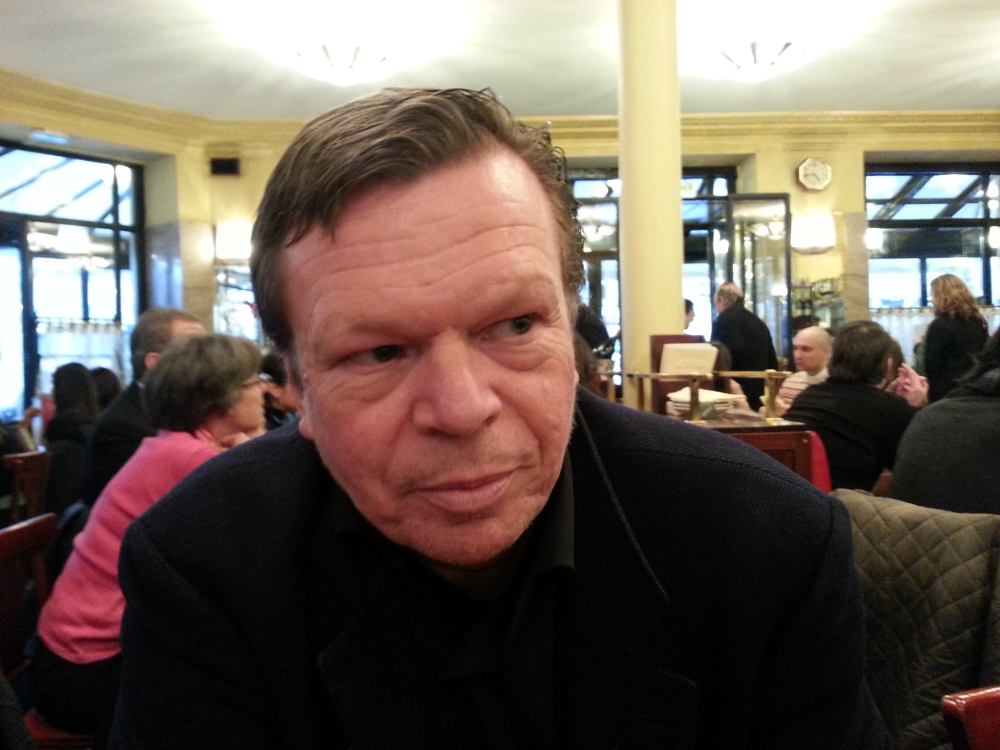
Peter is founder of the Heroine’s Journey and Hero’s Journey project where worldwide thousands of professionals shared their story of making money doing what you love. He wrote 50+ books. Peter has an MBA in Marketing, MBA in Financial Economics and graduated at university in Sociology and Communication Sciences.
Introduction: A System for the Management of Meaning
Brands are as much a part of our daily lives as our workplaces and neighborhood landmarks.
BIg, enduring brands become icons – not just of corporations, but of whole cultures. Coca-Cola not only has the most recognized logo in the world, but the logo has become a symbol of the Western way of life.
Today the brand is a repository, not merely of functional characteristics, but of meaning and value. But if we are to identify and effectively leverage the essential elements or ‘immutables’ of our brands, we must become fluent in the visual and verbal language of archetypes.
The creators of great brands have intuited this simple truth. For example, superstars in the film and entertainment industry and the agents who manage them, understand that their continued popularity does not hinge simply on the quality or success of the films they make or the visibility they attain. Rather ,it depends on creating, nourishing and continuously reintepreting a unique and compelling identity or ‘meaning’. Lady Gaga and Madonna change their lifestyles and hairstyles but they are always the outrageous Rebel. Offscreen and on, Jack Nicholson is the bad-boy Outlaw. Tom Hanks imbues in every role he plays with the spirit of the wide-eyed Innocent or Dreamer. Robin Williams is everytime the Jester. These identities are not only consistent – they are compelling. love them or hate them, you can’t help but notice them. In fact, we can’t help but he mesmerized by who they are and what they implicityly stand for.
News stories that really grip public attention always have an archetypal quality; when the next big story breaks, we’ll be caught again because each story that so mysteriously grabs us is some version of ‘Once upon a time….’ a mythic tale acted out in real life. Similarly films that are box office hits almost always have archetypal structures. For example six Academy Award winners for ‘Best Motion Picture” all exemplify classic archetypal stories: Forrest Gump (1994) the power of the Wise Fool; Braveheart (1995), the triumphant Warrior, The English Patient (1996) and Titanic (1997), the transformative Lover, Shakespeare in Love (1998) , the Creator (writer) transmuting the suffering of lost love into ennobling art, and finally American Beauty (1999), the Regular Guy as mystic (a midlife crisis in which the dark night of the soul leads to the experience of mystic enlightement – and sadly in this case, death).
What is an archetype?
Forms or images of a collective nature which occur practically all over the earth as constituents of myths and at the same time as individual products of unconscious origin – C.G. Jung, Psychology and Religion
The concept of archetypes was borrowed by Jung from classic sources, including Cicero, Pliny and Augustine. Adolf Bastian called them “Elementary Ideas’. In Sanskrit, they were called ‘subjectively known forms’ and in Australia, they were known as the ‘Eternal Ones of the Dream’ – Joseph Campbell, The Hero with a Thousand Faces
Jung to some extent took the opposite approach to that of the behaviorists, that is, he did not observe people from the outside, did not ask how we behave, how we greet one another, how we mate, how we take care of our uoung. Instead, he studied what we feel and what we fantasize while we are doing those things. For Jung, archetypes are not only elementary ideas, but just as much elementary feelings, elementary fantasies, elementary visions. – Marie – Louise Von Franz, Psyche and Matter
Sometimes the writer, director, and producer simply intuit the archetype. Sometimes they are guided by a conscious system. The Star Wars series – as well as spin-off action figures and other products – holds endless appeal. In making these films, George Lucas has been guided by Joseph Campbell’s The Hero with a Thousand Faces, which outlines all the rich and evocative stages of the Hero’s Journey,. The popularity of each episode is derived in large part from the way Lucas consciously crafts the entire series to convey archetypal characters and mythic plots.
Products grab – and keep – our attention for the same reason. They embody an archetype. For example, throughout the ages, cleansing rituals have signified more than physical cleanliness. They also symbolize the removal of sin or shame, bestowing rectification and worthiness upon the person who has performed the ritual. Brands that capture the essential meaning of their category – and communicate that message in subtle and refined ways – dominate the market. But only if and when their story is authentic
PART I THE FIRST SYSTEM FOR THE MANAGEMENT OF MEANING
Advertising always has used archetypal imagery to market products. The judicious use of such symbolism can fuel a leading brand. Brand icons go further. It is not just that archetypal symbols and images are used to position the brand, but over time, the brand itself takes on symbolic significance. To comprehend the power of this phenomenon we must understand the nature of symbols. Some symbols have the deepest religious or spiritual meaning. For example, within Christianity, Baptism is the ritual of purification, while Communion provides a ritual for the acceptance of divine grace. It would, of course, be sacrilegious to exploit any faith’s particular symbolism in order to sell products. Yet both sacred and secular symbols of renewal exist on a continuum unified by an archetype. While the conscious power of a religious symbol is inordinately greater, the unconscious power of an archetype, even in an entirely secular context, is immense.
Meaning as a Brand Asset
Understanding and leveraging archetypal meaning, once an interesting ‘bonus’ to effective marketing, is now a prerequisite. Why?
There was a time when successfully creating, building and marketing brands required neither endless inspiration nor endless capital. Demand exceeded supply, and markets were uncluttered. In the main, products were physically different from each other and brands were built on those differences.
Such was the case, for ages and ages in the marketing, or selling world. But once competition reached a certain threshold, every business encountered a new challenge. No matter how effective the company’s manufacturing and distribution systems, or how state of the art its processes, its competitors could imitate or duplicate them. In this circumstance, businesses found that they had only two broad strategic routes to go: reduce their prices or imbue their products with meaning.
Clearly; the creation and management of meaning was the more desirable option.
Ironically though, as critical as meaning has become, no system has been developed until now for understanding or managing the meaning of brands – be they products, services, companies or causes. We have had manifacturing systems for producing products, message development systems for creating candidates platforms, and business systems for marketing goods, but no system for managing what had become a brand’s most leverageable asset.
Why not? Partly because the need to manage meaning was a relatively new phenomenon. If you were the only soft drink in town you could market your product on the basis of its features and benefits. And if you were the only dry cleaner in the neighborhood, you could market your store on the merits of its convenience, environmentally sound packaging, and effective cleaning.
However, in increasingly crowded and highly competitive categories, the cases in which brand differentiation could be based on discernible product differences became rare or nonexistent. And even if a corporation was successful in creating a legitimate product-based point of difference, it was quickly imitated and duplicated by competitors.
As early as in 1983, Paul Hawken identified a profound change in the relative importance of product ‘mass’ versus product ‘meaning’ that required a corresponding shift in business models. Soon after the investment market made a comparable discovery, whereupon whole corporations were acquired simply to obtain their powerhouse brands – even though other brands offered virtually identical products. Something new was happening. Capitals were spent to purchase certain brands because they possessed a trait or property that was not fully understood and that caught the purchasers totally off guard.
The truth was that these brands had become phenomenally valuable not only because of their innovative features or benefits, but also because these properties had been translated into powerful meanings. They were worth millions because they had gained a kind of meaning that was universal, larger than life, iconic.
Whether the new managers understood it consciously or not, they had become the stewards of archetypal brands. The meanings these brands hold are like primal assets that must be managed as carefully as financial investments. And most companies have not been prepared to do so, because, quite simply, no system was available to guide them.
Levi’s once a strong and clear Explorer brand, drifted from Outlaw to Warrior, back to Explorer then to Regular Guy or Gal, then to Jester – and sometimes presented a patchwork quilt of archetypal identities all at once, reflective of the confused management of both the parent and the subbrands. The company’s market share declined accordingly.
Nike, one of the great Warrior brands of all times, cbecame clichéd and self-conscious in that role and publicly demonstrated a loss of confidence, changing advertising agencies and brand managers – when the real solution was to tap more deeply and surely into the Hero’s Journey, a never-ending soure of inspiraton for each of the twelve archetypes.
These companies had some of the most sophisticated and talented marketing professionals at their helms; nevertheless, they lost their way. The result was chaos, similar to what would happen if CFOs tried to manage money by making everything up as they went along, without any system of financial management or accounting.
The meaning of a brand is its most precious and irreplaceable asset. Whether you’re selling a soft drink or an AI agent what your brand means to people will be every bit as imprtant as its function – if not more so – because it is meaning that tells us ‘this one feels right’ or ‘this one’s for me’. Meaning speaks to the feeling or intuitive side of the public; it creates an emotional affinity, allowing the more rational arguments to be heard.
North Star Marketing
Marketing without a system for managing meaning is anallogous to ancient navigators trying to find port in treacherous seas on a starless night. What they need is an enduring and reliable compass. A fixed place that illuminates both where they are and where they must go. For marketers, the theory of archetypes can act as this compass.
I have designed the Hero & the OUtlaw to communicate the first system – ever – for the management of meaning. And like many sound ideas, it borrows from very ancient and eternal ones.
Imprints, hardwired into our psyches, influence the characters we love in art, literature, the great religions of the world, and contemporary films. Plato called these imprints ‘elemental forms’ and saw them as the idea structures that formed a template for material reality. Psychiatrist C.G. Jung called them ‘archetypes’.
In the marketing world, we have had no comparable concept or vocabulary. Yet brands are, i truth, among the most vibrant contemporary expressions of these deep and abiding patterns. Wether through conscious intent or fortunate accident, brands – be they AI agents, superstars, products or companies – achieve deep and enduring differentiation and relevance by embodying timeless archetypal meaning. In fact, the most successful brands always have done so.
This phenomenon is not about ‘borrowing’ but rather becoming a consistent and enduring expression of meaning. – essentially become a brand icon. Brands that have achieved this status, accidentally or as a result of fabulously gifted instinct, have captured and held the imagination of the public. And, if they are wise, their marketers have stayed the course simply because what their brands have come to represent resonates with the public so well and so consistently.
But reliance on genius goes only so far and lasts only so long. Sooner or later, brands suffer from the fact that there has been no science related to the development and management of meaning. When business as usual takes over, there is no compass to guide the inevitable choices or decision points that determine a brand’s fate: How to keep pace with the times without losing the brand’s essence? How to survive fierce competitive assaults? How to appeal to multiple segments – perhaps numerous cultures – without violating the brand’s core meaning? How to market responsibly and in a way that does not exert a negative influence on the customer or the times?
In the absence of such a science or compass, irreplaceable and invaluable repositories of goodwill – brand meanings – are squandered.
This journey adresses the critical need, and the tremendous opportunity, to create, preserve, protect and nurture brand meaning by leveraging its deep archetypal roots.
We do this first by dignifying the process of maning meaning. Today, even in the most sophisticated companies, this most critical of processes is left to chance, to the whim of an art director and copywriter or to the serendipity of casual brainstorming: Should we be friendly and accessible, or aloof and alluring?
Developing the most critical element of what our brand represents too often is a careless or frivolous process. Thus, it is no wonder that marketing teams keep reinventing the brand and, in doing so, dilute or destroy its meaning.
I have designed this journey to share my experience developing and utilizing the first systematic approach to meaning management. It began with the awareness that archetypal psychology could provide a more substantive source for the science of creating effective advertising. What we found was a far deeper truth: Archetypal psychology helps us understand the intrinsic meaning of product categories and consequently helps marketers create enduring brand identities that establish market dominance, evoke and deliver meaning to customers, and inspire customer loyalty – all potentially, in socially responsible ways.
This system offers a structure for describing the archetypes that already have provided powerful identities for numerous winning brands. By using this system, you do not have to step out on a limb to implement archetypal branding strategies in your company. Rather, you can follow a theoretically sound, proven method for establishing a brand identity for your product, your service your company or even yourself. As we explored the archetypal basis of successful brands, we discovered the 12 major archetypes expressed most often in commercial activity today.
The Missing Link: Archetypes and Customer Motivation
Archetypes provide the missing link between customer motivation and product sales. Virtually all marketers know that they need to understand human motivations. Until now, however, no scientific method has been available that would allow them to link the deepest motivations of consumers with product meaning. The missing link is an understanding of archetypes. An archetypal product identity speaks directly to the deep psychic imprint within the consumer, sparking a sense of recognition and of meaning.
Archetypal images signal the fulfillment of basic human desires and motivations and release deep emotions and yearnings. Why do you suppose our hearts leap up, our throats choke, or we begin to cry at certain moments.
One psychological explanation for such responses is that either we are unconsciously reliving critical moments in our lives or we are anticipating them. These archetypal images and scenes call people to fulfill their basic human needs and motivations. In an ideal world, the product serves a mediating function between a need and its fulfillment.
A System That Integrates Motivational and Archetypal Theory
In brief, motivational theory can be condensed into a focus on four major human drives positioned along two axes : Beloning/People versus Independence/Self-actualization and Stability/Control versus Risk/Mastery.
In everyday human terms, this means that most of us want very much to be liked and to belong to a group. At the same time, we also want to be individuals and go our own way. BOth of these desires are deep and profound human urges yet they pull us in opposite directions. The desire to belong makes us want to please others and conform, at least to some degree. The desire to individuate causes us to spend time alone and make decisions or act in ways that those close to us may not understand.
Similarly most people have a deep need for security and stability. Such desires are fulfilled by routine, comfort and staying with the tried and true. We are responding to them when we buy insurance, stay in a job for the pension plan or religiously take our vitamins. Yet, however much people want safety, most also are energized by their ambition and the desire to exert mastery. If we want the exhiliaration of accomplishment, we must take risks. So, motivated by the wish to leave a thumprint on the world, we take a controversial stand, start a business, or try other new and risky ventures.
Life requires constant negotiation along these poles. When we sacrifice one end of one of these continua to the other end, there is a tendency in the psyche to seek balance. That’s one of the reasons some people experience midlife crises; they have gotten out of balance, and some part of them that has been suppressed for too long seeks expression.
This grid provides a quick diagnostic test for recognizing the underlying motivation to our clients organisational mission and their brand identity.
Archetypes mediate between products and customer motivation by providing an intangible experience of meaning. It identifies the archetypes most important to the fulfillment of the four basic human needs.
The Hero’ and the Outlaw shows how archetypal theory provides a sound, proven methodology for establishing a memorable and compelling brand identity, one that can withstand the test of time, cross lifestyle and cultural boundaries, and translate into succes that endures.
ARCHETYPES THE HEARTBEAT OF ENDURING BRANDS
In Ancient Greece and Rome, archetypes formed the basis of myths, in which they were depicted as gods and goddesses. These deities, together with those of other ancient cultures, provide some of the specific images associated with the 12 archetypes in this journey. Even though the actors in today’s mythic stories are mere mortals, not gods, the same plots fascinate us. Think of the ancient Greeks fascination with stories of Zeus’s (the Ruler’s) sexual exploits and the suffering and faithfulness of his wife Hera.
Similar patterns hold with corporations. Apple has made many serious business mistakes, but repeatedly has been saved by the great loyalty of its customers, who tend to love the company anyway. The firm’s motto Think different’ its logo of an apple with a bite out of it (suggesting Adam and Eve’s disobedience in eating from the Tree of Knowledge) its reputation for innovation – each calls up the archetype of the constructive independent Outlaw.
The Product as Prop in an Archetypal Drama
When archetypes are active, they evoke deep feelings. Sometimes those feelings have a spiritual resonance. Similarly entire product lines can take on a meaning that gives them symbolic power in all of our lives. A tuxedo (black tie) signifies that an occasion is important. Champagne says that we are celebrating.
Some product lines also feel right as gifts in certain circumstances, because they serve as props in the story someone is just entering. A car for the young man or woman coming of age.
The Pinocchio Effect
When you understand the potential archetypal power of your product, marketing becomes much simpler, more rewarding and worthier of respect. The management of meaning is about selling products, but it also is about selling meaning with integrity. If companies fulfill their meaning promise to the same degree that they deliver quality products, they help customers in two ways: 1) by providing a functional product or service and 2 by helping people to experience meaning in ordinary life. If they do not, they are unlikely to compel brand loyalty
Archetypes enoble life by highlighting its meaning. For example someone might feel attracted to another person without experiencing meaning but the moment they connect with the love story, the archetype of the Lover is evoked and the world comes alive. Similary you might undertake a journey to Tuscany get in touch with yourself, or seek your fortune, the archetype of the Explorer is activated and the experience becomes filled with meaning.
In a way archetypal meaning is what makes brands come alive for people. Think of stories like Pinocchio wherein an inanimate object comes alive. Archetypes are the heartbeat of a brand because they convey a meaning that makes customers relate to a product as if it actually were alive in some way. They have a relationship with it. They care about it.
One expression of the intimacy that develops between customers and archetypal brands is how users tend to give these brands nicknames, signaling as they would with friends or relatives, a special closer relationship.
Some products have succeeded easily at this because a clear, verifiable, and deliveralbe meaning is intrinsic to their function. Harvard, Yale, MIT and other elite colleges generally market a Sage meaning, implicitly promising that if you go to such a school, you will know more, think more clearly and be smarter than you were before entering. To use archetypal language, you will awaken the Sage within you.
Archetypal Meaning as the Driver of Product Development
Leveraging archetypal meaning is not simply about indiscriminately ‘attaching’ meaning to a product. While it is true that archetypal meaning can play a role in differentiating commodity brands, this role is not its best or highest use. Brands that become iconic are archetypal through and through.
The best archetypal brands are – first and foremost – archetypal products, created to fulfill and emody fundamental human needs.
How Archetypes Affect Consciousness
Not only conventional products and services, but also superstars, films and public figures have achieved exceptional success by stumbling into archetypal territory. In fact, anyone associating meaning with a product already has moved onto archetypal terrain. The problem is that most marketing professionals have not been trained to understand the archetypal dimension. Consequently they are dabbling in powerful material without fully comprehending it. But creating an archetypal identity, nourishing it and managing it can an must become a deliberate, insight-based process. To use this theory, it is essential to understand what an archetype is and what it does.
One way to being is by examining the great story patterns we see repeated throughout literature and film. One such scenario might involve a sexual encounter. Another might be about rising on the corporate ladder. Still another might begin with a character skipping work and going to the beach. While these stories and the fantasies upon which they are based may or may not have literary merit, you can easily recognize the plot structure as variants of the romantic love story the rags-to riches tale or the take-me-away-from-it-all escape narrative, respectively. Although Freud assumed that our fantasies resulted from our experiences and conditioning only, Jung noted that fantasies are quite predictable, following well-known narrative patterns. Jung’s perception was that al human beings share a common psychic heritage that undermines apparant differences of time, space and culture.
One measure of how deeply these myths express elemental human concerns is the extent to which they are both timeless and universal. Mythologists and anthropologists see the same themes, situations and stories played out again and again, across the ages and around the globe.
Perhaps the underlying reason that archetypes are so enduring is that, in essence, they reflect our inner realities and struggles. The external particulars may vary, but the essential journey is always the same.
The various myths and archetypes found all around the world are basically expressions of the inner human drama: We can understand them as different expressions of an eternal impulse to find a human meaning in the mystery of creation. We ‘recognize’ them because we have programmed to do so. If you have only a few seconds to get your message across – as in a television commercial, print ad or Web page – you can do so more effectively if your message taps into the stories we know already. We come into life instinctually resonating to these archetypal stories because of the very ways in which our minds are configured. Therefore, the meaning of a product can be communicated very quickly simply by evoking a story or a concept that calls forth the viewer’s instinctual recognition of some fundamental recognizable truth.
Archetypes are the ‘software’ of the psyche. One archetypal program or another is active and engaged at all times. For example, some people live constantly from the perspective of the ‘dont’ fence me in Éxplorer or the my way or the highway Ruler. These archetypes can be seen as the default mode for such individuals, just as an email or word-processing program might be the default mode on our computers. Brands that are associated with each of these archetypes will feel right and comfortable to the people who express them and lend meaning to their lives in some interesting way.
Imagine a computer preloaded with a package of software programs. You cannot open and learn them all at once. Like software, archetypes lie dormant in the unconscious until they are opened or awakened. Just as software helps us do things such as write a book, archetypes help us to fulfill ourselves and develop our potential. For example if the Warrior in us is awakened, we can learn to call up our courage to fight for others and ourselves.
The social implications of commercial communication awakening dormant archetypes are enormous and terrifying. However , we have no responsible way to avooid the potential pitfalls of this process but to learn what we are doing and why. Anyone engaged in the management of meaning already is operating at the archetypal level and affecting the consciousness of individuals and of our time. It is best to do so with caution, integrity, and most of all – knowledge of the archetypal terrain.
POSTMODERN MARKETING
Think about it. We are living in a time of great affluence wherein many people have access not only to virtually any product they want, but also to education, travel and information. Yet to a great degree, cultural consensus about values has broken down. We have few if any sacred stories to give our lives meaning. The problem of mankind today, therefore is precisely the opposite to that ot men in the comparatively stable periods of those great coordinating mythologies, which now are known as lies. Then all meaning was in the group, in the great anonymous forms, none in the self-expressive individual; today no meaning is in the group, none in the world; all is in the individual. As a result, people are thrown back on their own devices. They have to find themselves and know what they think, feel, want and stand for. For brands, this means that the archetypes of the Explorer (for finding identity) and the Sage (for exploring one’s inner world) likely are salient motivators. In addition when people aspire to be unique individuals, capable of independent choice, they are attracted to higher levels of other archetypes than they might have been before.
Within each archetype is a wide range of behaviors, some very simple and others more evolved. For example within the Lover archetype you will find 1 simple awakening of lust 2. the desperate desire to attract a lover 3 the attainment of deep and abiding romantic love 4. the capacity for intimacy with family, friends and colleagues and 5. Spiritual love for all of humankind or even all sentient beings.
As i watch archetypes in ads and brands today I see that brands communicate with the reader at the lower stages of each archetype – the forms in which the archetype is expressed when a person is not self-actualized. For example, everywhere I look I find Explorer ads. Marketers clearly understand that this archetype speaks to people today. Yet I was disappointed that so few of them tapped into the deeper and more interesting level of the archetype. The overwhelming majority of the Explorer adds I saw focussed simply on either being out in nature or feelings of alienation. Few were designed to help people with the deeper learning task of the archetype – that of truely finding oneself.
Beyond Market Segmentation, Beyond Stereotyping
Even more importantly because most people in the field of marketing do not understand archetypes and because they think in terms of market segmentation they have an unfortunate tendency to reduce archetypes to stereotypes. If marketeers think in terms of market segments it may be tempting to stereotype a client, mentally confining her to a very narrow motivational category.
However if we realize that she is a human being, then it isn’t difficult to recognize that from time to time, she might feel trapped by her high-powered life. Like many of us she may be working so hard that she has begun to feel too driven. Every human being has a basic desire to achieve and this desire may have taken over her life. In addition, we all have a need for pleasure and adventure. Our client might not even be conscious of this sense of yearning or the need for balance. Yet, despite this lack of awareness, she is suddenly attracted by advertising images that connote freedom.
The woman who is juggling multiple roles may be empowered by the ability of the archetypal Hero to overcome great challenges or the Ruler to maintain order when chaos threatends. But she also may be attracted to archetypes that give her what she is craving, rather than those that simply reflect what she is experiencing. Thus she may respond to the peace and simplicity of the Dreamer or the erotic intensity of the Lover.
Empowering stories. To do archetypal branding well, it is advisable to tap into the deeper, more humanly compelling quality of archetypes, rather than treating them in an incidental manner as lifeless stereotypes.
Crossing Boundaries
In the past, the image a company conjured up might result in part from conscious marketing decisions but even more so from the unconscious assumptions of people in the field. You know people who go into nursing because they are caring. So, too, corporations whose products support health and healing may have Caregiver values. A young ingenious hacker may enjoy a line of work that involves continuous learning and endless innovation. A technologically innovative computer firm may be energized by the same Sage archetype motivations.
Quite unconsciously the management of these companies tends to be attracted to brand identities consistent with the archetypes that simultaneously are shaping their own behavior and the corporate culture. THis is how some leading companies happen onto archetypal identities and manage to retain them over time – especially if they have leadership that trusts their own insides and their intuitive hunches. They like brand identities that are like them. However, if they don’t – and if marketing firms convince them to follow every fad or public whim – theyinevitably will drift from one to another, creating no clear lasting impression.
Marketing and advertising firms also have their unconscious biases. Within the field, individuals and firms have quite different reasons for getting out of bed in the morning. We all know people in advertising who have a novel in the drawer or ideas for making videos or films. They are in advertising because the field offers a well-paid way to express their creativity and artistry. We also may know people who love the competitive aspects of marketing – and are propelled onward by their enjoyment of the contest. Still others like the mental stimulation of marketing strategy. In archetypal terms, these examples reflect the archetypes of the Creator, the Warrior (as competitor) and the Sage. If people in the field are uneducated about archetypes, the approaches they try to sell may simply reflect their own unconscious predilections and not be optimal for the client.
To determine the brand identity a company will like, it is best to find out who the firm thinks it is – in terms of the archetypes it is living out. The biographies of successful business leaders demonstrate that, generally, they are drawn to a field or a product for some reason. Even in a societal context where money and success are primary, individual’s deeper values are reflected in the details of their ambitions – the dreams that propel them forward. These values and dreams create an identifiable organisational culture, which is then reflected in its brand identity. We can trace the values to the underlying archetypes (in this case, Ruler and Outlaw respectively) making it possible to factor the archetype of the organisation into discussions of brand identity.
Individuals, societies, and organisations frequently have different archetypes that are dominant but each has at least some access to all archetypes. While a CEO might have a dominant Ruler archetype, he may buy a toy for his son that appeals to his own fun-loving Jester or his desire to nurture a child (Caregiver). He may be motivated to buy a necklace for his wife to express his Lover, or to spend more time developing the technological side of his industry in service of his Sage. Similarly, successful companies are so generally because all the archetypes are expressed somewhere within them. Organisations that thrive have at least one active archetype in each quadrant helping them to find their unique mission (individuality) create the feeling of community (belonging) get the work done (mastery) and create stabilizing structures (stability).
Yet, for a brand identity to be compelling it needs to be simple and easy to recognize. This means that brand identities are forged best by identifying solidly with one – and only one – archetype. The archetype within the brand serves as a beacon for the corresponding motivation in all of us. In practice with the high rate of product innovation, it generally is prudent to brand the company, not just the product or services. Companies do best when they are explicit about the archetype that is truest to their values, mission, and vision – and allow that archetype to shine, like a beacon in a lighthouse, drawing others to their shores.
Until now, in most companies the link between organisational culture, corporate values, and brand identity has been informal and largely unconscious. The system I describe here can provide a means to discover, articulate and strengthen that connection. Brand identity for an organisation is like the persona for an individual. It is the image we present in the world. When an individual’s persona is too different from the reality of the self, he or she becomes neurotic. So, too, with organisations: If their brand identity and their actual corporate culture, policies and procedures are discordant, they become unhealthy. As a consequence, both employee morale and credibility with customers begin to plummet.
As with the individual, an organisation does not have to show the world everything and certainly does not have to display its dirty linen. Nevertheless in a world where people from all over are chatting with your employees, the more congruent you are, the better off you will be. Understanding and aligning the archetypal core of your values your organisational culture and your brand identity and having a logic and a language to help you do so – allows you to manage meaning in a way that can prevent scandal and embarrasment, while also inspiring employee and customer loyalty.
Customer Loyalty and the Experience of Meaning
The most profound change affecting marketing for the new millenium is the quasi-priestly role it plays in a society without sacred stories to provide our whole culture with shared meaning. In part the lack of such stories offers us a kind of personal freedom never before experienced. Anthropologists tell us that in the developed world, for the first time in history of the human race, the story of our lives cannot be predicted by our gender and our social station at birth. We are free to define ourselves for ourselves and to choose our own life path.
Of course, this freedom brings tremendous power and exhilaration. But it also creates an unprecedented degree of stress. We have to figure everything out on our own. It is wonderful to have such opportunity for self determination and self definition, but it is also burdensome, because we have to be pioneers in the journey of life. The personal icons and heroes who once provided models for how to live one’s life have largely been replaced by friends and relatives who, however valued or beloved, may not set a relevant or useful example.
Adding to our predicament, we are engaged in this quest at a time when civilisation provides us with almost no cultural guidepost. The village elders, the Bible, the great oral tradition, the classic stories – all have fallen by the wayside, just at the time we need them most.
But the human need for archetypes to guide us does not evaporate; rather, it grows. And as with al human needs, when the original source of satisfaction is absent, something fills the void. We are creating meaning without managing meaning.
It’s no wonder then, that the public appetite for meaning, particularly archetypal meaning, is so strong that archetypal brands, in the form of personalities, public figures, and corporate offerings , are fervently embraced and fiercely defended. All products have the potential to be mediators of meaning, somewhat like ritual objects.
How does this differ from addiction, which keeps people coming back for more in a destructive way? We become addicted to substances that promise what they cannot deliver and thus manipulate the psyche. Archetypal marketing on the other hand is rooted in product truth and actually fulfills people’s deeper yearnings.
People need authentic meaning. Victor Frankel credits a sense of meaning with enabling people to survive in concentration camps.
Of course people derive meaning in their lives primarily from their faith, their families, or their sense of purpose. If they do not do so, their lives will have a void that commerce can never fill. However, with commercial messages, products and services infiltrating every single aspect of our lives, it is important that they carry significance and values as well – especially if marketers understand that the meaning most products deliver to people is of a much lower order than the experiences people have in their lives.
Consciously utilizing brands and the products that bear their names to provide meaning not only creates customer loyalty, but also helps people experience greater fulfillment in their lives and their work at least in small ways that incrementally improve the quality of everyday life. That’s how to build strong and resilient customer loyalty.
Imagine – just imagine – that we could do so consciously, responsibly and well. We could be the first generation of marketers to adress timeless and universal needs in a way that builds timeless, universal, commercially effective – and psychologically constructive – brands.
The Telescope and the Artichoke
The ancients employed their native human abilities in pattern recognition to group stars into constellations that they then used to navigate difficult waters. Similarly this first system for the management of meaning provides a kind of telescope to help you see the patterns that unify the ‘stars’ in the branding world. Without a system you may not see these patterns – or you may connect the dots in ways that are unique to you, but that do not resonate with others.
Parts 2 through 5 of these journey will help you recognize the underlying patterns that explain why archetypal brands and archetypal communication have such power. These chapters focus on the 12 archetypes within the four motivational categories, exploring how each archetype is expressed in typical advertisements (many of which don’t represent a coherent brand concept) brand identities, customer motivation, organisational cultures and marketing strategies.
Parts 6 and 7 are more like an artichoke. When eating the artichocke, you strip away extraneous leaves until you get to the core. Similarly, to determine which archetypal meaning is best for your brand, you will need to strip away surface information to discover the deeper core meaning that can make your product, service, or organisation a winning brand. I will show you how to tell your brand story in a compelling way – not just in advertising, but in everything you do. Then I pull all the information described up to that point together in a case study format, highlighting how archetypes helped provide a new sense of mission for some companies.
Part 7 shows you how to recognize the archetype most essential to your brand’s product category how to align your brand identity with your corporate culture and how to consider the deep ethical issues relevant to the marketing of meaning.
Overall, The Heroes and the Outlaws provides an in-depth understanding of the impact of brand meaning on consumer psychology and on the collective consciousness of our time. It is created primarily for professionals in the field of marketing and executives who make marketing decisions. It also is useful for people in the organisational develpment field, as well as others in management who can help to align an organisation’s policies, procedures, and culture with its brand identity. In addition The Hero and the Outlaw can be helpful in developing consumer literacy.
THE YEARNING FOR PARADISE
Today’s consumers all have some recollection, some experience of a wondrous moment when the perfect, good life seemed possible. For much of the rest of their lives, they seek to fulfill a longing for some ideal place where they can fell fully themselves and at home.
Some psychologists explain this yearning as a desire to reexperience the safety and oneness of the womb. In a more spiritual context, it can be seen as a result of the nostalgia we feel because we left a spiritual place for a material world.
In fact, many consumers today do live in a kind of paradise. IN material terms, we currently enjoy greater affluence than humankind has ever known. Yet happiness evades many of us because consciousness has not kept up with our material advantages. We have so many choices, in terms of how to pursue our individual destinies but so few guideposts to help us find the way. That is why archetypes and archetypal stories that provide a road map for self-actualization are more relevant than ever before.
The three archetypes that are central to this chapter provide different strategies for the pursuit of fulfillment. The Innocent is a bit like the lovely litlle child or the wise mystic, filled with wonder at the beauty of it all, still believing it is possible to live in paradise right now. At the lower levels of the archetype peple feel that this is their birthright and therefore become angry when life seems to let them down. At a higher level, the Innocent makes choices for a simpler, more values-driven life and moves into paradise by acting on this decision.
The Explorer is driven by a sense of not quite belonging, like the Ugly Duckling seeking its own kind. Exploreres suffer from an underlying dissatisfaction and restlessness, as if they are constantly seeking something better, but again and again saying ‘not this’ and hitting the road.
Developmentally this archetype helps with the task of finding oneself. All that outer seeking really is a strategy for exploring experiences, settings, relationships and products that resonate with the Explorer’s inner truth. Along the way, Exploreres have wonderful adventures.
While the Innocent seeks fulfillment in the here and now, and the Explorer hits the road in search of it, the Sage tells us that happiness is the result of education. Living with the level of freedom and abundance we now have requires a high level of consciousness and the attendant ability to make choices. The Sage archetype helps us gain the consciousness to use our freedom and prosperity to enhance our lives.
At the more everyday level, the Explorer looks for products and services that advance the journey of self-discovery, the Innocent looks for those that provide the experience of peace and goodness right now, and the Sage seeks those that are adjuncts to leraning or wisdom.
As consumers, Explorers are independent minded and curious. They like to try new things, so to gain their loyalty it is important to provide continual novelty and improvements in products. Innocents by contrast like to find a brand they can trust and stick to it, believing that ‘If it ain’t broke, don’t fix it. They are also brands that make life simple. Sages like to have all the relevant information they need to make informed decisions about brands. They also enjoy learning, so products that require a learning curve appeal to them.
All three archetypes emphasize self over others and autonomy over belonging. They often play out in opposition to the archetypes ….. which place a higher value on belonging than on authenticity. Of course to enter the Promised Land, it is necessary to find ways to balance the desire for individuation with the desire to connect.
THE INNOCENT
Motto: ‘Free to be you and me’
Every culture has myths of a golden age when life was perfect and utopian visions of how it might become that wonderful again. The Innocent in each of us wants to live in that perfect land where we are ‘free to be you and me’.
The promise of the Innocent is that life does not need to be hard. You are free to be yourself and to live out your best values right now, right here, just by following simple guidelines. The Innocent is extraordinarily attractive in this hectic, stressful age because it promises that you can get out of the fast lane, relax, and truly enjoy your life.
The Innocent
Core desire: to experience paradise
Goal: to be happy
Fear: doing something wrong or bad that will provoke punishment
Strategy: do things right
Gift: faith and optimism
The movie The Accidental Tourist plays on this Innocent hope that it is possible even to travel without experiencing the slightest inconvenience, while implicit in Forrest Gump is the faith that it is possible to experience all the challenges of the sixties, seventies, and eighties and remain unscathed if we keep the simple sweetness and love of a true Innocent. While none of us wants Forrest’s limited IQ, the incredible success of the movie tells us that we do appreciate his purity of spirit and his simple power to endure.
People who resonate to the Innocent archetype long to have the perfect work, the perfect mate, the perfect home, perfect kids and the ideal life The primary promise of the Innocent is that life can be Eden. Think of Christmas and most Christmas specials and the attendant sense of wonder and hope that life can be beautiful, especially if we simply believe in its possibilities and choose to do right ourselves. The secondary promise is that if any fall from Eden occurs, redemption is possible: Unpleasant or challenging events can lead eventually to a happy ending, and stagnation can lead to renewal.
Of all the archetypes, the Innocent has the most levels, because people experience it at both the beginning and the end of the journey. Initially the Innocent has a childlike quality of naivete and a simple, even unconscious dependence. Children should be able to take it for granted that their parents and other relatives will care for them. However, many people carry that outlook over to adult situations where such trust is not necessarily warranted.
Levels of the Innocent
The Call: a desire for purity, goodness and simplicity
Level One: childlike simplicity, naive, dependent, obedient, trusting, idyllic
Level Two: renewal, positive, reinventing, reframing, cleansing, reentering the Promised Land
Level Three: an almost mystical sense of oneness, whereby Innocence comes from values and integrity, not outer experience; being not doing
Shadow: denial, repression
The Promise of Paradise
The idea of an earthly paradise retains a tremendous hold on the imagination of the modern world, so much that Ernest Hemingway once said that all American literature was a search for paradise – the great good place’. In many myths the ideal place is symbolized by a domesticated landscape: a garden, a sacred grove, a pasture. Life is always easier in these places: Death, pain and suffering do not exist there, and you do not have to work hard to survice. In paradise you do not want for anything.
Even in a more materiaistic and competitive society, the Innocent archetype is associated with simple pleasures, basic values, and a wholesomeness that make it the meaning of choice for natural products. Possibilities for ads invoking the perfect experience are endless. Some brands acknowledge the limits of their ability to create Eden, appealing to consumers who recognize the reality that is quite an accomplishment to make any part of life wonderful.
The Innocent as Mystic
Advertising for products is taking on a more spiritual tone, sometimes in a tongue-in-cheek manner. Most people today are aware of spiritual practices that people follow for their whole lives before achieving the desired enlightenment. The lower level Innocent wants the outcome without the discipline and hard work. People today are tired. The driven pace of modern life, the striving of the Warrior, and the restlessness of the Explorer leave people little peace. Commercials appealing to the Innocent need to be slower than those aimed at the Explorer and less crisp. You can think Impressionists paintings, natural sounds, and gentleness in approach and imagery.
The Innocent Customer
When the Innocent archetype is active in an individual, a person is attracted to centainty, to positive and hopeful ideas, to simple, nostalgic images and to the promise of rescue and redemption. The Innocent also strives for goodness, which can mean finding the ‘right’ product but it also means choosing moral over immoral behaviors and kindness over greed. People who are high in Innocence often are very trusting and in some cases, unconsciously dependent and childlike. They place faith in authorities and institutions and expect them to deliver on their promises.
At the same time, people with a high degree of Innocence have a capacity for great independence from the dominant society. If customers believe that a product or an organisation can deliver on promises of paradise or that it is based on eternal values, they are willing to step out of the dominant society and its values in order to experience something they conceive to be of greater worth. The paradox is that Innocent consumers are both traditional – in wanting to connect with the values of the past – and also willing to sacrifice beloning to the larger society to connect with more enduring values than those they see as informing that society.
On the other hand, all this rushing about and resultant depletion of their energy can make Innocents regress, so some of them may evidence the lower levels of the archetype. In a large number of consumers, innocence is associated with a certain narcissism and childishness. Many customers today are impatient and do not like to wait. They want things when they want them and the way they want them. Sppedi is therefore of the essence, as is superb customer service.
Immature Innocents tend to dislike people who complain about or dwell on their problems. In fact, they dislike anyone who makes them see the negative potential in life (without providing a solution) which includes corporations that make excuses for their lack of responsiveness. The majority of Innocent consumers today expect to be the center of value for the corporation: Their wishes are the corporation’s command.
Innocents also have a tendency to go into denial about problems and not face them until they escalate, simply because they want life to bbe perfect – now. Many consumers today expect perfection in their dealings with the corporate world. If you do not fulfill this fantasy, they happily go elsewhere. But at the same time, customers who respond to the appeal of the Innocent archetype, are likely to be loyal to your brand if their experience is positive, simply because, unlike Explorers Innocents like predictability more than novelty.
The Innocent archetype provides a good identiy for brands that:
- Provide a relatively simple answer to an identifiable problem
- Are associated with goodness, morality, simplicity, nostalgia or childhood
- Have functions associated with cleanliness, health, or virtue – and that are infinitely replicable
- Are priced moderate to low
- Are produced by a company with straight-arrow core values
- Desire to differentiate from a product with a tarnished image
The new Innocent is savvy and skeptical as well as weary. Yet, the more jaded people get, the bigger is the pull of the great dream. Innocence is not really about reality; it is about keeping hope alive.
In American Beauty, the hero leaves the emptiness of his career recognizes the pathology of his dysfunctional family and escapes into regressive patterns of lusting after a teenager. By the end, he has the quintessential Innocent mystic vision, recognizing tha the simple pleasure of living his life, is in fact, enough. His expression of profound gratitude for the gift of being alive – as well as audiences’ unexpected appreciation of the film – suggests a new level of the Innocent in the world today, one that is able to see the beauty in life even while recognizing its limitations.
THE EXPLORER
Motto: Don’t Fence Me IN
While the Innocent expects to be able to live in paradise, as a right or by virtue of a shift in consciousness, the Explorer goes out seeking a better world. The journey Explorers are experiencing is simultaneously inner and outer, because they are motivated by a deep desire to find what, in the outer world , fits with their inner needs, preferences and hopes.
The Explorer’s story is at the root of the success of the whole genre of travelogues, fairy tales in which the protagonist goes on a journey, gets entrapped in some way and finally escapes; science fiction (about exploring the universe) coming of age stories; narratives about leaving marriages, jobs or town; expatriate literature; literature about seeking the promised land and all absurdist literature demonstrating human alienation.
Products and services that successfully embody the Explorer archetype must serve in some way as useful props on Explorer journeys in order to compel any kind of brand loyalty. This starts at the level of literal journeying and moves into its more figurative versions.
The Explorer
Core desire: the freedom to find out who you are through exploring the world
Goal: to experience a better, more authentic more fulfilling life
Greatest fear: getting trapped, conforming, inner emptiness, nonbeing
Strategy: journey, seek out and experience new things escape from entrapment and boredom
Trap: aimless wandering, becoming a misfit
Gift: autonomy, ambition, ability to be true to one’s own soul
Props for the Journey
One expression of the Explorer is the simple desire to hit the open road and to be in the wild, wide-open spaces of nature – to experience the joy of discovery. Products then that serve naturally as props on the Explorer’s journey. If you think of the typical ad for such a product, you know the Explorer’s most natural setting: big open skies; the appeal of the open road; nature in all its variations, but especially mountains, asking to be climbed; the compelling quality of the receding horizon, always removed, no matter how far you travel; the night sky, speaking volumes about the infinite possibilities of outer space.
Levels of the Explorer
The Call: Alienation, dissatisfaction, restlessness, yearning, boredom
Level One: Hitting the open road, going out into nature, exploring the world
Level Two: Seeking your own individuality, to individuate, to become fulfilled
Level Three: Expressing individuality and uniqueness
Shadow: being so alienated, you cannot find any way to fit in
To create great Explorer brands, of course, you have to get into the Explorer story – not just the setting but also the costumes. Explorer’s desire for freedom makes them wary of being tied down by anything. Music is a great solace on the road. What might you want to drink when you’re on the road.
The Explorer as Individualist
The Explorer may be expressed in the desire for self sufficiency. Although not all Explorers are libertarians, they tend to be critical of the establishment. However, whereas the Hero may fight to change the world, the Explorer more typically simply lives by his or her own lights. This may mean setting up – or shopping at – a different kind of business.
Explorers tend to see themselves as – and often are – ahead of their time and definitely willing to take tough stands for something they belive in.
The Explorer archetype has a spiritual side. Think about the Knights of the Round table, each entering the wilderness, where there was no path, in search of the Grail.
Walking in the Moccasins of the Explorer Customer
When the Explorer archetype is active in customers, their call is to explore the world and in the process to find themselves,, so that they know who they are. Some Exploreres demonstrate great exuberance ans a sense of adventuring. Others, seem reluctant about all this journeying, wishing all the while to find a place to call home. Plainly, the Explorer’s inner self is sometimes not as confident as the face he or she presents to the world.
To market an Explorer brand effectively, it is best to empathize with the Explorer story from the inside, imagining for example it’s like to feel trapped by your life, to yearn for more excitement and adventure, to feel ‘bigger’than your life, as though it is constraining you.
You might also consider the part of you that wants to belong as dangerous, sacrificing your integrity to your desire to fit in. If this feeling is strong, you may consciously do things to set yourself apart. It is as if your appearance is yelling ‘i am different’ so that you will resist the impulse to conform. However, the more you do this, the more lonely you feel, so the more intense will be your desire to belong. The stronger it gets, the scarier it feels, so you back off more and more … and so on. Even if you have experienced this only a little, you can extrapolate from it enough toknow how someone looked in such a dilemma might feel.
Most people have had some moment when they were afraid that if they were true to themselves, they would lose the support of someone they cared about.
It is important to remember that the underlying desire of Explorers is to finally find the Promised Land, the place where they can be completely true to who they are – and belonging.
Undoubtedly you also have experienced the more optimistic and enthusiastic Explorer, who is not necessarily alienated at all. Perhaps you are simply eager to experience as much life as possible, seeking opportunities to travel and spend time in nature doing what you love, even though doing so will not get you anything other than the sheer joy of the journey itself.
The Explorer Organisation
Explorer organisations value individuality, de-emphasize rules and hierarchical decision making, and tend to equalize opportunity as much as is workable. We can see the influence of the Explorer archetype in newer, flatter, and more deomcreatic organisations; in individualistic policies like flex-time and in empowered workers making as many decisions as possible at the most local and involved level. In such organisations workers are typically hired for their expertise and once on board expect to be allowed to go their own way for the most part. Even if outcomes are set by management, workers are permitted to use their own judgment about how to reach them.
When the Explorer awakens in individuals, they often start their own small business, become consultants, or seek out a pioneering or scouting role in their company. The companies or units they run are more freewheeling and decentralized than the traditional hierarchical organisation. Typically small, Explorer organisations have as few rules as possible and hire competent professionals who control their own hours and their own time.
People who are living in Explorer stories are most likely to be loyal to products that carry the archetypal meaning of authenticity and freedom – if they are to be loyal at all. Such products reinforce the deeper longings of customers with a strong freedom orientation. These archetypes also connect with the ‘dormant’ freedom – loving part of customers who more habitually express their desires for stability, belonging and mastery.
The Explorer archetype might provide a brand identity for your brand if
- your product helps people feel free, is nonconformist, or is pioneering in some way
- your product is rugged and sturdy or is appropriate for use in nature, on the road, or in dangerous settings or occupations
- your product can be purchased from a catalogue, the internet or another alternative source
- your product helps people express their individuality
- your product can be purchased and consumed on the go
- you seek to differentiate your brand from a successful Regular Guy/Gal or other more conformist brand
- your organisation has a Explorer culture
THE SAGE
Motto: The truth will set you free
Sages have their own way of finding pparadise. Their faith is in the capacity of humankind to learn and grow in ways that allow us to create a better world. In the process, they want to be free to think for themselves and to hold their own opinions. The most obvious example is the scholar, researcher or teacher. However it can also be the detective, or any expert sharing knowledge.
The Sage
Core desire: the discovery of truth
Goal: to use intelligence and analysis to understand the world
Greatest fear: being misled, duped, ignorance
Strategy: seek information and knowledge become self reflective and understand thinking processes
Trap : can study issues forever and never act
Gift: wisdom intelligence
Levels of the Sage
Call: confusion, doubt, deep desire to find the truth
Level One: search for absolute truth, desire for objectivity, looking for experts
Level Two: skepticism, critical and innovative thinking, becoming an expert
Level Three: wisdom, confidence, mastery
Shadow: dogmatism, ivory tower, disconnection from reality
The Sage organisation
Sage organisations are found in universities, research labs, think thanks and companies that see themselves as learning systems that is organisations whoe structure and values promote continuous learning. Emphasis is placed on analysis, learning, research and planning. Quality is seen as resulting from the expertise of employees, whose freedom of opinion must be protected. The pace is measured, because thorough study is considered essential before change take place.
As employees, Sages have a high need for autonomy. If you think of universities and research labs as the quintessential Sage environments you can see that Sages want to come and go as they please, they like to do the work in their own manner, and they prefer peer to administrative evaluation. They are often skeptical of the ability of any mere manager to now enough to make educated decisions about their work.
The Sage organisation typically has a very decentralized structure, emphasizing the development of expertise rather than control. Employees are expected to know what they are doing and therefore are free to make autonomous decisions. Usually a small administration handles the business and marketing side of things but most of the major decisions – about the curriculum, teaching strategies and even promotion and tenure decisions – are made primarily by the faculty, generally through a cumbersome set of committees. Faculty are completely free to come and go as they please, as long as they teach their classes and hold office hours. They conduct whatever research interests them, under the protection of academic freedom.
The Sage customer
When the Sage is active in the lives of customers, they are keenly interested in learning for its own sake. Freedom and independence are valued as means of keeping one’s objectivity. One individual might be more interested in inner knowing and another in knowledge of the external world, but in any event both feel that it is essential to hink for oneself and have one’s own opinions.
The Sage archetype might provide a suitable identity for your brand if
- it provides expertise or information to your customers
- it encourages customers or clients to think
- the brand is based on a new scientific breakthrough or esoteric knowledge
- the quality of the brand is supported by hard data
- you are differentiating the product from others whose quality or performance is questionable
The Sage part of a person agrees with the statement ‘I think, therefore I am’. When the Sage is dominant in someone’s character, learning is a compelling motivator. The accompanying fear is of being duped by misinformation and therefore misinterpreting data or a situation. At worst, the Sage is dogmatic, arrogant and opinionated. At best, he or she becomes a genuinely original thinker and achieves real wisdom.
In appealing to a Sage, it is important to establish your credibility. Otherwise, why would they listen to you? Moreover never talk down to the Sage and never use a hard sell: They want to feel competent, smart and in charge of the transaction. IF they feel that you are pushing them, they are likely to distrust you and walk away. To Sages a purchase is a rational transaction. They want you to provide information about the quality of the good or service being sold and its cost. Then they simply want to make a logical decision based on the information. However, if in the process you help them feel confused, incompetent or pressed. Reinforce their wisdom and if you have a product that is demonstrably of high quality, they will reward you with their loyalty.
LEAVING A THUMBPRINT ON THE WORLD
WARRIOR, OUTLAW, MAGICIAN
We seldom speak of the Warrior, the Outlaw and the Magician in one breath, but they are, in fact, powerful archetypes cut from the same cloth. In classic film and literature, they are often fearless protagonists who realize their own special power and go on to take great personal riskes in order to change their reality. In day-to-day life, these powerful archetypes provide a structure that can release the ability of ordinary people to rise to challenges, take risks, break rules and transform their lives. They help them develop the quality of mastery, requiring them to embrace risk and change, which can trigger an inner conflict with the need for safety, structure, and security. They are each, in their own way, magnetic, because they are about change – with all of its accompanying anxiety and exhiliration. The outcome can be socially positive, disruptive or purely magical.
Changing times require people who are energized by risk and who want to prove their own capacities through rising to challenge after challenge. The ability to take risks and to persevere to the point that we really accomplish something of consequence results in high self-esteem and social validation. When these archetypes are active in people, they want to take action to have an impact on the world. Emotions related to such aspirations tend to be fiery and energetic, ranging from anger, to ambition to fierce determination. The Warrior, the Outlaw and the Magician use this energy to leave a thumbprint on the world or to mobilize in order to destroy or transform rigid, enervating structures. If these figures are missing in our personal lives – as they often are – we crave their presence in the marketplace and in the media.
The Warrior, the Outlaw and the Magician all take a stand against some limiting, restrictive or harmful reality. The Warrior takes a great personal risk in order to defeat evil forces to protect society or sacred values. The Outlaw acts as a disruptive force, violating cultural norms and rules for the good of others, for adventure and personal gain or out of desperate alienation. The Magician acts as a catalyst for social and institutional transformation or healing. In all three cases, the underlying desire is to take action and exert power. The underlying fear is of allowing life to just happen to you – of being a victim or a wimp.
We live in an achievement- oriented society ìn which people are expected to take great risks and develop competence in order to contribute to the society (Warrior), while technological advancements such as computers, AI and genetic engineering bring magic into everyday life (Magician). At the same time, large numbers of people seem increasingly alienated to the point that they identify with outsiders if not actual outlaws.
The Warrior, the Outlaw and Magician as power archetypes, focus consumer attitudes and actions relevant not only to achieving one’s aims but also to changing the world. They therefore provide natural brand identities for products and services that have a marked impact on their time and place.
THE WARRIOR ‘Motto: Where there is a will, there’s a way’
Everything seems lost, but then the Warrior rides over the hill and saves the day. There are infinite variations on this story, but in every one the Warrior triomphs over evil, adversity or a major challenge and in so doing inspires us all. Virtually all superheroes fit this just as their adversaries are classic Outlaws.
We see the Warrior in any crusader for a cause or in efforts to rescue the victim or defend the underdog. The natural environment for the Warrior is the battlefield, the athletic contest, the streets, the workplace or anyplace where difficulty or challenges await courageous and energetic action.
The Warrior wants to make the world a better place. His or her underlying fear is failing to have what it takes to persever and prevail. This archetype helps us develop energy, discipline, focus and determination.
The Warrior
Desire: prove one’s worth through courageous and difficult action
Goal: exert mastery in a way that improves the world
Fear: weakness, vulnerability, wimping out
Strategy: become as strong, competent and powerful as you are capable of being
Trap: arrogance, developing a need for there always to be an enemy
Gifts: competence and courage
When the Warrior archetype is active in individuals, they may be ambitious and seek out challenges or they may be more reluctant Warriors who recognize an injustice or problem and simply rise to the occasion to do what needs to be done to remedy it. Either way the Warrior is invigorated by challenge, feels outraged by injustice, and responds quickly and decisively to difficulty or opportunity.
Warriors pride themselves on discipline, focus and an ability to make tough choices. They are the instinctive protectors of those they see as innocent, fragile or legitimately unable to help themselves. All others, they prefer to shape up. Warriors often evince qualities that heighten consciousness in everyone around them. In fact their secret is who they are, not just what they do.
At their worst Warriors become arrogant or bullying, or they drive themselves into an early grave. At their best, they accomplish great things. Paradoxically, Warriors do not think of themselves as Heroes because to do so seems presumptuous. More typically, they see themselves as just doing their jobs. If there is anyone they really dislike, it is not so much the villain as it is the wimp. Therefore, they are vulnerable to taking a dare or a challenge even if it may be foolish.
There is, of course, a negative potential within the archetype, just as there is within all archetypes. The conquering Warrior can be a horrible bully. At the lowest level the Warrior archetype simply wants to prevail. The trap within the Warrior can be that you see yourself as heroic, but others see you as a villain. When this occurs, it behooves you not to dig in your heels, but to stop, see what they see and correct your course.
Levels of the Warrior
The Call: the bully kicks sand in your face or someone tries to intimidate or abuse you; a challenge beckons; someone needs you to help defend him or her
Level One: the development of boundaries, competence, mastery, expressed through achievement, motivated or tested through competion
Level Two: as with a soldier, doing your duty for your country, organisation, community or family
Level Three, using your strength, competence, and courage for something that makes a difference to you and to the world
Shadow: ruthlessness and obsessive need to win
Consumers – especially those who express the higher levels of the Warrior archetype – are hungry for convictions and attracted to people, companies and brands that have them. In the Dream Society Rolf Jensen predicts that before long, brands wil lbe seen as the owners of meaningful stories, not products. The most compelling stories are those which communicate some value that ennobles life. ‘The battle of the 21st century will be fought on a microfont where the bone of contention is the individual’s attention. Companies will gradually enter the market for convictions primarily because the customer wants it. Customers are already taking companies to task asking questions like ‘Does your company have no heart, no feelings? Are you nothing but a rationalistic profiteering machine? Ironically companies that value nothing but competition and the bottom line are also evincing the Warrior archetype in its more primitive stages. What we can see from this is that when the archetype is expressed in the public at a higher level, people reward brands with their business.
We see the triumph of the higher level of the Warrior archetype in the emergence of cause-related marketing and the increasing consumer expectation that companies will engage in philantrophic activities. When marketing to the Warrior, know that you are being evaluated not only by the quality of your product or services, but also by the strength and ethics of your convictions.
The Warrior identity may be right for your brand if:
- you have an invention or innovation that will have a major impact on the world
- your product helps people perform at their upper limit
- you are adressing a major social problem and asking people to step up to the plate to help adress it
- you have a clear opponent or competitor you want to beat
- you are the underdog and want to rival the competition
- the strength of your product or service is its ability to do a tough job efficiently and well
- you need to differentiate your product from one that has problems with follow-through
- your customber base identifies itself as good, moral citizens
THE OUTLAW Motto: Rules are meant to be broken
The Villain in the melodrama curls his mustance and smiles, and young girls are caught between dread and attraction. The siren sings and the sailor is lured to his death.
The Outlaw has the enticement of forbidden fruit. Finding their identity outside the current social structure, such Outlaws are faithful to deeper, truer values than the prevailing ones. Such Outlaws are faithful to deeper, truer values than the prevailing ones. Such Outlaws are romantic figures, ready to disrupt a society that has succumbed to tyranny, repression, conformity, or cynicism.
Of course we also see the Outlaws who lack such principles – who are just alienated, angry, and willing to victimize others to get what they want. People who give up on getting what they want in a healthy and socially acceptable way may turn to illegal or unethical strategies in order to prevail. They may not feel moral but they at least feel powerful. While the Warrior wants to be admired, the Outlaw is satisfied to be feared. At least, fear implies power of some sort. The styles differ. Each in his or own way, a mobster, a revolutionary, a skinhead may feel powerful making others scared or uncomfortable.
Any kind of effective action against them dispels the fear of victimization, so the cowboys with the black hats ride in and shoot up the town with no more of a goal than simply to disrupt things and feel powerful. Both the Warrior and the Outlaw feel anger. The Warrior takes action when he or she is outraged by injustice. The Outlaw’s anger tends to be provoked by being slighted as a person. Whereas Warriors identify with their community, Outlaws feel deeply estranged from it.
The natural habit for the Outlaw is places that are hidden and shadowy out of the way. Psychologist Jung described the way in which individuals and cultures have Shadows – qualities that are judged unacceptable and hence are hidden and denied. People do not want to acknowledge their own shadows, even to themselves, so they often project them onto others, seeing tose others as the problem. The Outlaw holds the shadowy qualities of the culture – that is the qualities the society disdains and disregards. In this way, the Outlaw can release society’s pent-up passions – as in more ancient times, festivals allowed great license and operated as a release valve that in fact, helped stabilize the culture.
The Outlaw
Core desire: revenge or revolution
Goal: to destroy what is not working (for the outlaw or the society)
Fear: being powerless, trivialized, inconsequential
Strategy: disrupt, destroy or shock
Trap: to go over to the dark side, criminality
Gift: outrageousness, radical freedom
When Outlaw consciousness is present, people are more acutely aware of the ways civilization limits human expression. The threat of the Outlaw is that an individual, quiet rebellion will break out in ways that begin to destroy the society, either eroding it from within or demolishing it in a violent eruption. The negative pole of the archetype is evidenced in characters like Darth Vader and outher villains who have gone over to the dark side. The negative Outlaw then, thrives in organisations that allow profit and competition to outweigh any moral value or sense of social responsibility and in the ever-present danger that hostile take-overs will destroy the identity (and hence the soul) of healthy companies.
Carriers of Outmoded and Revolutionary Behaviors
Outlaw brands have a complicated role. They can reinforce soulless, cynical behaviors when values are absent. But they can also assist in bringing down an oppressive establishment, help to open and ease social restrictions or serve as a safety valve that allows people to let off steam thus protecting the status quo. In addition they can reinforce real revolution, breaking through staid and repressive thinking to champion a whole new way.
Outlaw products are best marketed in special interest (online) magazines or through flyers, personal ads and other formats designed to find Outlaws. This does not mean that you cannot reach a large audience. Images used can have a dark, shadowy quality to them and often also feature quite intense colors. Moreover this archetype likes things that shock, on a continuum from the mildly surprising joke to the truly disturbing. The Outlaw is the archetype most suited to sustaining an edgy identity and to the creation of edgy ads that really work.
The Outlaw in each of us also want to get away with things. Therefore, slash and burn sales are great marketing strategies as are various kinds of cash kickbacks for buying a certain product. Events held to launch or promote Outlaw products need to allow people to kick back and feel free; they may even seem a bit racy or on the edge of violating propriety.
Levels of the Outlaw
Call: feeling powerless, angry, mistreated, under siege
Level One: identifying as outsider, dissociating from the values of the group or society in a way that flies int he face of conventional behaviors and morality
Level Two: behaving in shocking or disruptive ways
Level Three: becoming a rebel or a revolutionary
Shadow: criminal or evil behavior
The Outlaw may be a good identity for your brand if
- consumers and employees are feeling very disaffiliated from society
- the function of your product is to destroy something or is genuinely revolutionary
- your product is not very good for people, so using it is akin to thumbing your nose at society’s ideas of what constitutes health
- your product helps retain values that are threatened by prevailing ones or pioneers new and revolutionary attitudes
- your product’s price is low to moderate
THE MAGICIAN Motto: It can happen
The earliest images of the Magician were the shaman, the medicine man or woman, and the village witch or wizard. Later we had the alchemist, seeking to turn lead into gold. Still later, we had scientists probing the fundamental secrets of the universe, psychologists studying the workings of human consciousness and gurus offering to share spiritual success secrets. Most basic to the Magician is the desire to search out the fundamental laws of how things work and to apply these principles to getting things done. The most typical applications of magical lore are to heal the mind, heart, and body to find the fountain of youth and the secret of longevity; to discover ways to create and maintain prosperity and to invent products that make things happen.
Magician brands include all those that foster ‘magical moments’: sparkling water, champagne, many cruise lines, spas. All transformation offerings.
The spirit of the Magician is easily evoked when the product has exotic or ancient origins or if it involves some special ritual, such as popping corks, decanting wine, or swirling brandy and sniffing its aroma. The Magician is also a great brand identity for corporate change strategies, miracle drugs, herbal remedies, spas, exotic travel and of course any product or service that directly affect consciousness – advertising being one.
Magicians are at the basis of radically new technologies. AI, genetic engineering, self driving cars. The image is not so different from the image of Frankenstein of the doctor bringing the monster to life which electric current as a storm rages outside. We can see the hope and the fear that are invested in the image of a scientist as a modern miracle worker and ‘mad genius’ who tries to play god and bring destruction on us all.
Entrepreneurs are often Magicians as are athletes. Spiritual ideas linking inner consciousness with outer performance are yielding miraculous results in the business and sports worlds. Magical people often have dreams that other people see as impossible ,yet it is the essence of magic to have a vision and then walk right into it. When things go wrong, Magicians look inward to change themselves. Then the outer world changes as well.
When the Magician archetype is active in individuals, they are catalysts for change. Trusting synchronicity they expect that if they do their part, the universe will meet them. To the Magician, consciousness precedes existence. Therefore if you want to change your word, you begin with changing your own attitudes and behavior. People who have an active inner Magician value experience, seek spiritual help and at their best, strive to be true to spiritual guidance.
Such people also typically understand at a deep level how consciousness works, so they are able to influence others in highly effective ways. The Magician archetype is therefore very strong in charismatic politicians, business leaders, and, in fact, the whole field of marketing, trading as it does on the influence of human consciousness on behavior.
You can see the negative potential in the Magician in stories of evil sorcerers, using their power to work their will on unsuspecting victims. The negative image of the Magician also shows up in charismatic political leaders who use their power to charm, not to bring out the best in people, but to promote fascist and racist ends. This negative trap within the Magician archetype can, of course, be seen in anyone who uses his or her emotional intelligence to manipulate rather than communicate with, others.
The Magician
Core desire: knowledge of the fundamental laws of how the world or universe works
Goal: make dreams come true
Fear: unanticipated negative consequences
Strategy: develop vision and live it
Trap: becoming manipulative
Gift: finding win-win outcomes
The ability to realize your dreams is also associated with a certain simpatico association with the environment. Psychiatrist Jung coined the term ‘synchronicity’ to refer to meaningful coincidences whereby the inner and outer worlds connect. An example would be when you think of someone you have not seen in a long time, and suddenly the phone rings and there she is, calling you. When this kind of coincidence happens, it always feels miraculous.
A magic commercial shows everything in the external world – happening in the same rhythm. Such an experience of the outer and the inner being in sync is also a symptom of what Mihaly Csikszentmihalyi in Flow: the psychology of optimal experience, calls ‘flow’ a condition he identifies with the achievement of happiness for most people.
Levels of the Magician
Call: hunches, extrasensory or synchronistic experiences
Level One: magical moments and experiences of transformation
Level Two: the experience of flow
Level Three: miracles, moving from vision to manifestation
Shadow: manipulation, sorcery
Magical Marketing, Magical Management
Magician leaders and magician organisations can call upon any or all of the archetypes as invisible but powerful strategic partners in managing the meaning level of all aspects of contemporary work. Executives should be cautious not to think of contemporary organisations in terms of legal entities, profits, buildings or anything esle really tangible. Nor are they hierarchies. Just as citizens see themselves as peers rather than subjects, modern employees expect to share decision making TO attract and retain employees, you need to manage an emotional drama that is compelling and makes people want to stay. If the drama is gripping many will want to join the show. The cold company figures, after all, do nothing to reflect the battles for contracts and clients being constantly lost and won. They do not reflect innovations and ideas being hatched at creative meetings. Above all, the emotionless balance sheet does not reflect the social interaction – the conflicts, the friendships, the collaboration and the jealousy. The balance sheet reveals as much about corporate life as would a word count of William Shakespeare’s sonnets.
In the Magician organisation, the secret of success is not the management of money, but the management of consciousness within a context that is now radically peer focused.
Marketing to Magicians
There is today an emerging consumer force that can be described as cultural creatives, who share a magical belief that they are the storytellers of their own lives. As customers and as employees these magical people believe that who you are is as important as the quality of your product or services. You are therefore always selling yourself, your values, and your own consciousness when you market to them.
To market effectively to Magicians, it is essential to first engage in enough self-reflection to identify who you are, what you value, and what you want to achieve in the world. If you can then recognize the archetype that best captures your inner allegiances and develop marketing strategies congruent with those allegiances, you draw people to you who are aligned with your consciousness and with your product or service. The result is marketing a kind of magic.
Everything you do then should reinforce that archetype, which begins to servce as a magnet to organize all the ‘data’ customers, supllier and employees have about you. THeir own internal filters will likely discard the rest unless the information is so blatantly antithetical to your avowed identity as to call attention to the discrepancy.
Remember too that Magicians are motivated by the desire for personal transformation and for the chance to change people, organisations and their times. Magicians will appreciate it if you offer them transformative experiences. However the biggest payoff comes if you can help a customer improve him – or herself.
Magician bands and Magician marketers know that if you give (or sell) a person a fish, they will eat for a night. Teach them to fish, and not only will they eat forever, but they will be loyal to you – forever.
The Magician may be a good identity for your brand if
- the product or service is transformative
- its implicit promise is to transform the customer
- it appeals to New Age consumers or cultural creatives
- it helps to expand or extend consciousness
- it is a user-friendly technology
- it has a spiritual or psychological component
- it is a new and very contemporary product
- it is medium to high priced
NO MAN (OR WOMAN) IS AN ISLAND
Regular Guy/Gal, Lover, Jester
From the early gatherings of cave dwellers and tribesman to today’s popular chat rooms, people’s desire to connect, interact and belong has een a primal urge. Three archetypes help us to fulfill this need by providing a model or structure for doing so. The Regular Guy/Gal helps trigger the behaviors and outloos that allow us both to fit in enough to be parto of the group and to place a value on all people, not just those who excel. The Lover aids us in becoming attractive to others and also helps us develop skills of emotional and sexual intimacy. The Jester teaches us to lighten up, live in the moment and enjoy interacting with others without worrying about what they may think. Symbols and brands that are the embodiments of these archetypes are powerful because they express and affirm a cricial sense of likability, popularity and connectedness.
The three archetypes mediate very different sorts of vulnerability than do those related to our need for mastery, control and power. Instead of worrying about having an impact on the world, the customer ponders the questions, Am I likeable? Attractive? Fun? Will people accept me? Can I be part of the group and still be myself? How do I find true love? And how do I put my life together so that I enjoy it?
Customers in whom these archetypes are strong may be especially attracted to brands that help them connect with others. But the nature and form of that connection may take on unexpected dimensions.
It is important here to remember that the Regular Guy/Gal, Lover, and Jester may be a more dominant motivational focus in some customers, but all customers – whatever shows in their surface behaviior – have a desire to affiliate with other human beings. In our driven culture, people often do not have much time to hang out together so people are more and more lonely. As a result, these archetypes have additional power to motivate because they promise to fulfill repressed and unsatisfied needs. The more these three archetypes are undervalued in the culture, the greater is their motivating power.
THE REGULAR GUY/GAL Motto: All men and women are created equal
The Regular Guy/Gal demonstrates the virtues of simply being an ordinary person, just like others. Identification with this archetype has fueled the success of people who are ‘with the common touch’.
When the Regular Guy/Gal archetype is active in an individual, the person may dress in working class or otherwise ordinary clothes (even if he or she is quite wealthy), speak in colloquial ways, and be put off by elitism in any form. The underlying value is that everyone matters, just as they are. The credo is that the good things of life belong to everyone as a birthright, not just to an aristocracy or even a meritocracy.
The Regular Guy/Gal is the fundamental archetype of democracy, with the central precept of ‘one man or woman, one vote’.
Liberation movements, of course, remind us that in real life most societies exclude some people, however lovely their rhetoric of inclusion might be. In ancient indigenous cultures, being exiled or excluded from the group could mean that you would be alone in the wild, prey to all sorts of predators. I practice, exile was equivalent to a death sentence. Even today, people who have poor communication skills and are unable to connect well with others are at greater risk of being unemployed or homeless than are people in whom those skills are more developed. We all still need to create social networks for support. Indeed it is networks that inevitably position even the disavantaged for good jobs and support their subsequent success.
Everyone knows the desperation of adolescents to fit in – if not in the ‘incrowd’ at least in some crowd. This sense of loneliness or exclusion – be it on the part of an individual or an entire group – represents the trigger for the great appeal of the Regular Guy/Gal; the desire is not to be special or different in any way, but simply to melt into the pack. And once that yearning is satisfied, the tendency is simply to revel in the calm reassurance of ordinariness.
The Regular Guy/Gal
Core desire: connection with others
Goal: to belong, fit in
Fears: standing out, seeming to put on airs, and being exiled or rejected as a result
Strategy: develop ordinary solid virtues, the common touch, to blend in
Trap: give up self to blend in, in exchange for only a superficial connection
Gift: realism, empathy, lack of pretense
Don’t put on Airs
The Regular Guy/Gal wants to be part of the tribe – whether it is a clique, a social class, a workplace culture, a church, a club or a union. The group may be the one that he or she was ‘born into’ or it might be one quite different. Nonetheless, the desire is to quietly fit in.
There is a complete absense of artifice in this archetype, as there is a kind of leveling tendency.
Regular Guys/Gals do not simply cheer for the home team; they root for the underdog.
Regular Guys/Gals love self-deprecating humor, reassuring others and themselves that they are not taking themselves too seriously.
The word ‘Real’ is a defining one for the Regular Guy/Gal. All artifice is suspect, as is the desire for glamour or luxury.
Just the Facts!
The Regular Guy/Gal hates artifice, hype and people who put on aires. Regular Guy/Gal brands, therefore, almost always have a downhome, no-nonse quality to them that makes them seem genuine.
The Myers-Briggs Type Indicator differentiated itself from a number of slicker and higher priced psychological instruments to become a best-seller all over the world by presenting itself as the people’s psychological tool, even making the most of the fact that the establishment did not initially accept its importance.
The Dignity of the Common Man or Woman
The Regular Guy/Gal is the solid citizen who makes life work. They can be readily seen in people who are neighborly, who put in a good day’s work for a day’s pay, and who evidence a certain solid reliability and grounded common sense.
The Third Place
The natural meeting place for Regular Guys and Gals is neither the home nor the workplace. Historically, people met in public spaces that were conductive to conversation about things of general interest. Sometimes the y went places simply to mill about, or to sit quietly side by side. The purpose is not just to provide food, but also to offer a community center where people of different ages and classes can all hang out and feel comfortable.
Levels of the Regular Guy/Gal Archetype
Call: loneliness, alienation
Level One: the orphan, feeling abandoned and alone, seeking affiliation
Level Two: the joiner, learning to connect, fit in, accept help and friendship
Level Three: the humanitarian, believing in the natural dignity of every person regardless of his or her abilities or circumstances
Shadow: the victim who is willing to be abused rather than be alone, or the lynch mob member, willing to go along with abuse in order to be one of the gang
Marketing to the Regular Guy/Gal Impulse
Today when virtually all products sport logs, it is important to understand their appeal. To the Ruler, the logo speaks of status. To the Explorer, the logo may be a statement of identity. To the Regular Guy/Gal the logo is a means of affiliating, a way of demonstrating your connection with others who use that product and identify with its brand meaning.
The Regular Guy/Gal archetype provides a good identity for brands
- whose use helps people belong or feel that they belong
- whose function is something used commonly in everyday life
- with pricing that is moderate to low (or that is an upscale version of a product that would ordinarily be inexpensive)
- produced or sold by a company with a down-home organisation culture, and
- that want to differentiate themselves in a positive way from a higher priced or more elitist brand
THE LOVER
Lover brands are common in the cosmetics, jewelry, fashion and travel industries. You also see the Lover in food categories, such as wine and gourmet foods, in which sensuality and indulgence are essential parts of the consumption experience.
The Lover archetype governs all sorts of human love, from parental love, to friendship to spiritual love, but it is most important to romantic love.
The Lover archetype also supports the development of gender identity. Whether you are gay or straight, part of growing up is about learning to identify with your gender.
The Lover archetype also inspires the whole genere of romance novels. We all know that most romances follow a very defined plot. The young and beautiful heroine meets Mr. Right, but some circumstance or misunderstanding keeps them apart until somehow th truth is revealed and after much heaving of chests and protestations of love, they marry and live happily ever after. Why are these stories so popular? Because these plots call up a deep archetypal yearning for the experience of true love.
Although the anticipation is that they will live happily ever after, the reality is that we live in a society where one out of every two marriages ends in divorce. Nevertheless, the search for true love continues to be lived out in most lives. If we cannot live happily ever after with one person, everyone expects us to get going and find someone else. What this means is that for many the Lover archetype is active not just in the twenties, but throughout life, involved either in keeping the love of one’s spouse or in finding someone new.
The Lover as an archetype is also active in intense and personal friendships. In the 19th century it was more normal than it is today to have passionate friendships with people of the same sex. Lovers may come and go but friendships last for a lifetime.
The Lover
Core desire: attain intimacy and experience sensual pleasure
Goal: being in a relationship with the people, the work, the experiences, the surroundings they love
Fear: being alone, a wallflower, unwanted, unloved
Strategy: become more and more attractive-physically, emotionally, and in every other way
Trap: doing anything and everything to attract and please others losing identity
Gifts: passion, gratitude, appreciation, commitment
How does Lover friendship differ from the Regular Guy/Gal archetype? For the Regular Guy/Gal it is important to fit in and belong, but not to stand out. Lovers , by contrast want to know that you are one of their best friends that you really know them and that they are really special to you.
Lovers think of themselves as being wonderfully appreciative of others. However, they typically dislike competitors who threaten to supplant them in the affections of others. Associated with the Lover archetype, therefore may be an underside of competitiveness that is generally unconscious and unacknowledged, with the rersult that jealousy can lead to very meanspirtied behavior.
When the Lover archetype is active in an individual’s life, he or she will want to look not only good, but indeed, beautiful or handsome. The underlying desire is to attract, give love and express affection in intimate and pleasurable ways.
Levels of the Lover
The Call: infatuation, seduction, falling in love (with a person, an idea, a cause, work, a product)
Level One: seeking great sex or a great romance
Level Two: following your bliss and committing to whom and what you love
Level Three: spiritual love, self-acceptance, and the experience of ecstasy
Shadow: promiscuity, obsession, jealousy, envy, Puritanism
The Lover archetype is about passion – not only in our love lives, but also in our work. Without a soul, there’s just a shell. Without passion , these would just be cars. Passion is such a strong emotion. It causes us to live, breathe and sweat our hearts out for the things in life we care about. For Chrysler, it’s about creating extraordinary cars. Cars born from breakthrough design and brought to life through innovative engineering.
I invite readers to follow your bliss. Today any number of personal development guides people in finding their own personal purpose by recognizing what they love to do.
The Lover organisation
The Lover archetype in organisations results in camaraderie, beautiful suuroundings and attention to the feeling dimension of work life. People are expected to dress well (not for statud reasons ,but to adorn themselves) and to share their feelings and thoughts freely. A sense of cohesion comes out of a sense of being special – of being beautiful people, appreciating the finer things in life, proficient in communication skills and social graces, and in many cases, exemplars of good taste or pioneers for new and emerging values. Typically employees really like one another and have a passion for the organisation’s values vision and products.
Lover organisations like to operate in a power sharing, consensual manner. Time is freely spent on the process of making decisions, especially being certain that al have had their say, but is often recouped in the implementation phase. When consensus is achieved everyone uniformly acts to implement the new plan.
The Lover informs many successful therapy and consulting practices whose success depends on the ability to help people feel safe enough to be vulnerable, on superb communication skills and on a close and trusting relationship with the client. Even in companies whose primary values emerge from another archetypal perspective, the Lover archetype may be required in times of rapid change or when people are fearful. At such times, team building is not so much about helping people to play their roles better but rather, it involves people to know one another well enough to develop real trust. Such organisational interventions help diverse populations move beyond superficial differences to relate to the more intimate reality of another complex human being, with dreams and aspirations not unlike one’s own. Ultimately the Lover archetype expands to spiritual love.
Marketing to Lovers
The Lover wants a deeper kind of connection – one that is intimate, genuine and personal (and sometimes also sensual) Such forms of connection – whether with lovers, friends or family members – require much greater knowledge, honesty, vulnerability and passion than the cooler connectivity of the Regular Guy/Gal. Of course they are deeper, more special and rare.
Lovers often identify products with certain relationships. They develop also relationships with products and companies – especially those that help them feel special and loved. Most people – and especially those for whom belonging is an issue – feel special, cared about, and nurtured in a world that often feels cold and impersonal. People in which the Lover archetype is dominant are the group for which relationship marketing and management is the most compelling. Consumers with a highly developed Lover archetype like being singled out for attention. For Lovers you don’t have to be perfect, but you do need to be real and open.
Where Regular Guys/Gals want products that help them fit in because those products are identical to what others are buying or wearing, Lovers prefer products that are one of a kind, unusual or tailored especially for them. The Lover also expects quality, not as the Ruler does, for status, but for enhanced pleasure in life.
Ideally then not only are Lover brands lovable themselves, but they also help the consumer feel special adored, and doted on. If the attention to the consumer needs flags, however, he or she may sing ‘You don’t bring me flowers any more’ and seek out a more attentive competitor.
The Lover is a promising identity for a brand
- whose use helps people find love and friendship
- whose function fosters beauty, communication, or closeness between people or is associated with sexuality or romance
- with pricing that is moderate to high
- if it is produced or sold by a company with an intimate, elegant organisational culture, as opposed to a massive Ruler hierarchy
- that needs to differentiate itself in a positive way from lower priced brands
THE JESTER Motto: If I can’t dance, I don’t want to be part of your revolution
The Jester archetype includes the clown, the trickster, and anyone at all who loves to play or cut up. While it is possible to have fun alone, the Jester calls us to come out and play with one another. Jester figures enjoy life and interaction for their own sake. Preferring to be the life of the party, the Jester has as his or her native habitat the playground, the neighborhood bar, the recreation room and anywhere where fun can be had. While both the Regular Guy/Gal and the Lover censor themselves in order to fit in or attract others, the Jester lets it rip, demonstrating a refreshing faith that it is possible to be truly oneself and be accepted and even adored by others.
Perhaps because we live in such an earnest culture, the Jester tends to be a good brand identification because virtually everyone is hungry for more fun.
Rules Are Made to Be Broken
Jesters are the archetype most helpful in dealing with the absurdities of the modern world and with faceless, amorphous present-day bureaucracies, partly because they take everything lightly and partly because they are happiest breaking the rules. The Jester’s politics are esentially anarchistic ‘If I can’t dance, I don’t want to be part of your revolution’ The Jester’s willingness to break rules leads to innovative, out-of-the-box thinking. It also makes for a good brand identity for things like fun foods that are not necessarily good for you.
The Jester also promises that activities which might ordinarily be seen as tedious or boring can be fun.
Jesters dislike party poopers, people who are overly earnest, and those who are lacking in humor. A downside of the Jester, therefore, can be a tendency to play though life without grappling with issues or thinking things through. When the Jester archetype is your brand’s identity, parental guidance is suggested.
Be Here Now
The Jester archetype helps us really live life in the present and allows us to be impulsive and spontaneous. When the Jester archetype is active in an individual, he or she just wants to have fun. The core desire here is to be spontaneous, recapturing the playfulness we had as little children. Laughter, joking and even pranks seem appropriate. In this frame of mind people who are too serious or responsible seem overly uptigt. Indeed, the Jester’s worst fears are of being bored or boring to others. In addition, the Jester promises that life can be ease.
The Jester
Core desire: to live in the moment with full enjoyment
Goal: to have a great time and lighten up the world
Fear: boredom or being boring
Strategy: play, make jokes, be funny
Trap: frittering away one’s life
GIft: joy
Rules Are Made to Be Broken
The Jester Organisation
The Jester organisation makes enjoyment the bottom line.
The Jester helps foster innovation in organisations, whatever their core archetype, by breaking up traditional categories of thinking. To the Jester, no outcome – even saving your life – should mean sacrificing joy in the here and now.
Marketing to the Jester
The Jester in every one of us loves humor. We like funny commercials because they entertain us, and the attendant good feeling creates a halo effect around the product. Jester ads and packaging highlight bright colors and lots of action – the more outrageous, the better. The Jester also loves to live. For this reason, virtual experiences are great ways to market to Jesters.
Most of all the Jester helps us get out of trapped, small-time thinking. Jesters excel at brainstorming. The most important aspect of Jester marketing is cleverness. The Jester in every one of us loves outrageous, clever, new ways of seeing the world. The best way to develop such marketing strategies is to lighten up your marketing team. Let the team play, bring in toys, come up with as many wild ideas as you can – no matter how outlandish they might be – to grease the wheels of creativity. The freer your team, the better your new ideas. Jesters love to stand on their heads, seeing the world in unexpected and unpredictable ways.
Jesters are also not as proprietary as other archetypes. If you think about it, you rarely ever hear who invented a joke.
Levels of the Jester
Call: ennui, boredom
Level One: life as a game, fun
Level Two: cleverness used to trick others, get out of trouble and find ways around obstacles, transformation
Level Three: life experienced in the moment, one day at a time
Shadow: self-idulgence, irresponsibility, mean-spirited pranks
Jesters are also not as proprietary as other archetypes. If you think about it, you rarely ever hear who invented a joke.
Most of all, the Jester simply loves the fun of marketing. This archetype is not frightened by knowing we are in a new time. Rather, it helps us actually enjoy facing a new situation every day. In the process the Jester helps keep advertising fresh enough to focus the attention of customers, so that their eyes do not glaze over – at least not when they see your ad.
The Jester is a promising archetype to provide identity for brands
- whose use helps people belong or feel that they belong
- whose function helps people have a good time
- with pricing that is moderate to low
- produced and/or sold by a company with a fun-loving, freewheeling organisational culture
- that need to be differentiated from a self-important, overconfident established brand
PROVIDING STRUCTURE TO THE WORLD
CAREGIVER-CREATOR-RULER
In medieval times, walls were built around villages and moats around castles in an attempt to maintain order and to protect against marrauding Vikings, Visigoths and Vandals. Today the threats to one’s well-being may be less imeediate or dramatic, but people still create lawns and build walls as expressions of the same desire for security and order.
Individuals generally relate to these desires from the archetypal stances of the Caregiver, the Creator and the Ruler. The Caregiver has a heightened awareness of human vulnerability, but is less focused on concern for him – or herself and more preoccupied with alleviating other people’s problems.
The Creator exerts control by creating a poem, a musical composition, a painting or a product.
The Ruler takes control of situations, especially when they seem to be getting out of hand. It is the Rulerś job to take responsibility for making life as predictable and stable as possible. Sizing up the human situation as inherently unstable, Rulers put procedures, policies, customs and habits in place that reinforce order and predictability.
The Caregiver, Creator and Ruler find satisfaction in environments that seem stable. Together they help make a profitable business. The Caregiver anticipates people’s needs, seeing what will make them feel secure, safe and nurtured; the Creator takes charge of innovating – new products, new manufacturing processes, new organisational and marketing structures and approaches; the Ruler then manages these new structures, seeing to it that quality is consistently delivered.
Today the desire for stability and control meets with special challenges as the pace of contemporary living forces each of us to deal with new situations daily if not hourly. CEOs recognize that even though they do all the right things one year, market, economic and legal conditions will change the next year, and the business needs to be restructured and rethought. Mergers and acquisitions now routinely pull the rug from under worker’s feet, forcing them to reconsider their livelihood and sometimes to seek training in entirely new fields. Funding for culture and the arts is abundant one year and missing the next.
Because of the uncertainty of life in general, and contemporary life in particular, the Creator, the Caregiver and the Ruler are especially useful archetypes for today’s brands. When they are not clouded in wistful nostalgia, but are interpreted in a contemporary and relevant context, they instruct us on how to preserve order and stability and how to reconcile our desires for consistency with change.
THE CAREGIVER Motto: Love your neighbor as yourself
The Caregiver is an altruist, moved by compassion, generosity and a desire to help others. The Caregiver fears instability and difficulty not so much for him – or herself, but for their impact on people who are less fortunate or resilient. Meaning in life, therefore, comes from giving to others. In fact, the worst fear is that something will happen to a loved one – and on the Caregiver’s watch.
Predictable caregiving images are associated with the nurse, the old-fashioned country doctor, the neighborhood cop, teachers and the like. But the true nature of the Caregiver, and of our relationship to the archetype is deep and complex, as complicated as our own relationships with the original Caregivers in our lives.
The Caregiver
Desire: protect people from harm
Goal: to help others
Fear: selflishness, ingratitude
Strategy: to do things for others
Trap: martyrdom of self, entrapment of others
Gift: compassion, generosity
In children’s legends and fairy tales, the maternal figure is often split into two opposites, the entirely wicked witch or stepmother and the perfectly pure good with or fairy godmother. It is difficult, it would seem, for us to integrate the complexity of the Caregiver into a coherent whole.
In prehistoric times, people carved little figurines of mother goddesses who, then as now, must have been revered for the power to give birth as well as the capacity to support life though providing food, comfort and nurturance. Throughout history, the Caregiver as an archetype has been associated with both maternal and paternal feelings of protectiveness toward children and the attendant willingness to do what is necessary to take care of them, even if doing so requires considerable sacrifice – but also with the darker fears of exerting excessive power and of being controlled.
Commenting about the desire to sometimes demonize the role of the Caregiver as a technique for trying to break free of its power, Anna Quindlen says ‘Fat chance, Freudians. Whether querulous or imperious, attentive or overbearing, warm or waspish, sucrease or succubus, she is as central as the sun’.
Understanding the complexity of the Caregiver and our relationship to it is essential to tapping into the full depth and dimension of the archetype in brand communication. It is also critical to making the archetype useful to contemporary consumers who more than understand that caregiving is a complex affair – fraught with conflict, sacrifice and the difficult desire to support, rather than suffocate.
Brands that reconcile the caregiving instinct with a world that often devalues it are not just effective in the marketplace; they play a constructive role in the evolution in our culture.
Levels of the Caregiver
Call: seeing someone in need
Level One: caring for and nurturing one’s dependents
Level Two: balancing self care with care for others
Level Three : altruism, concern for the larger world
Shadow: martyrdom, enabling, guilt-tripping
Natural Caregiver Categories
The concern of Caregivers for their children and other dependents makes this brand identity a natural consideration for medical care, health products, insurance, banks and financial planning – so much that it can lead to undifferentiated identities.
The Caregiver’s fear includes a concern about neglecting those you love. Often Caregivers do not just worry about their children. They worry about parents about anyone sick, about people in poverty and about their pets.
Children also worry about their parents – about disappointing them, about seeming to reject them by being different, or even by surpassing them in some way.
At their worst, brands skim the surface of the Caregiver stereotype. At their best they convey the essential qualities of the caregiving relationship:
- Empathy – seeing and feeling things from another’s perspective, not just our own
- Communicaton – listening – to what they say, what they don’t say and especially what they mean
- Consistency – wholesale, reliable, unquestioning commitment
- Trust – the bedrock of true attachment
Great mini-stories within ads can feature any of these elements of attachment and still trigger archetypal recognition.
Marketing to Caregivers
As you might imagine, one of the least effective ways to market to Caregivers is to tell them straight out that you care. Doing so in the modern cynical world just raises the response: Tell me another one. But if you show people you care, that is another thing entirely. If you do so, they will spread the word.
A long-term issue for people today is how to balance concern for oneself with concern for others. In our society, parents often invest heavily in their children’s education at the same time that they are paying for their parent’s care and at the same time that they should be putting money away for their own retirement. They have a similar concern about time and health – that is how to find time to care for others and still have a life and good health habits themselves. Adressesing these concerns can provide a great brand identity for enterprising companies.
Responsible people who exert a lot of their energy caring for others often really appreciate companies that care for them. Such people often have a nurturance gap: They are giving more than they are getting, and they need support. Any company that helps people care for themselves or that helps them meet their obligations with greater ease has the potential too be extremely successful in a society where both women and men are carrying caregiving responsibilities over and above their work obligations.
The Caregiver is a good identity for brands
- for which customer service provides the competitive advantage
- that provide support to families or that are associated with nurturance
- for services in the health care, education and other caregiving fields
- that help people stay connected with and care about one another
- that help people care for themselves
- for non-profit causes and charitable activities
What Caregivers want to hear is that they are not losers if they care about others. Our guess is that brands which avoid portraying the Caregiver in stereotypical ways, but that reinforce Caregiver values are well positioned to thrive. Any archetype that has been repressed always has energy. That energy can propel winning brands today, but only if the level of the archetypal expression is both androgynous and self-actualized.
Moreover, just as there has been a proliferation of services designed to help members of contemporary organisations work well together, the next frontier will be similar services to help families not only stay together, but develop the emotional ability to thrive in a community. Furthermore community development activities are on the rise. We have moved out of a time when our group affinities are defined by our etnic or racial identity. We now live in somewhat more integrated settings. Although there is also a counter-trend, people want to make a pluralistic society work, for the most part. Wise brands will understand that the Caregiver archetype is now being expressed not only in the family, but also inthe world. In some ways, it seems to us that brands can coount on people to be better than we have thought they were – and more capable of expanding the circle of care than had been thought. The Caregiver is always related to the Innocent because it is usually the Caregiver who makes the Innocent’s desire for a safe and beautiful world come true.
THE CREATOR motto: ‘If it can be imagined, it can be created’
The Creator archetype is seen in the artist, the writer, the innovator and the entrepreneur, as well in any endeavor that taps into the human imagination. The Creator’s passion is self-expression in material form. The artist paints a picture that reflects his soul. The entrepreneur does business her own way, often flying by the seat of her pants. The innovator in any field turns away from business as usual, tapping into his unique ability to imagine a different way.
Creator brands are inherently nonconformist. The Creator is not about fitting in, but about self-expression. Authentic creation requires an unfettered mind and heart.
The Creator
Desire: create something of enduring value
Goal: give form to a vision
Fear: have a mediocre vision or execution
Strategy: develop artistic control and skill
Task: create culture, express own vision
Trap: perfectionism, miscreation
Gift: creativity and imagination
When the Creator archetype is active in individuals they often are compelled to create or innovate – anything else and they feel stifled. Authenticity will seem extremely essential to them, as great art and society-changing inventions typically emerge out of the depth of soul or unfettered curiosity of someone who , in many ways, is a cultural pioneer. Indeed, artist typically see themselves as such, creating the world of the future. They may be pessimistic about the culture at large, but they trust the creative process and believe in the power of imagination.
Generally, they express their creativity in artsy clothing, homes and offices. Creators fear that their creations will be judged harshly by others. They often have a punishing inner critic and censor that says nothing is ever good enough. As a result they also fear giving in to this voice and failing to express their gifts at all.
People who are high in the Creator archetype, moreover, think of themselves as desirous of freedom, which they are. In this way they are like the Innocent,Explorer and Sage. However a deeper motivation is the need to exert aesthetic or artistic control – to be, in a way like God, to create something that has never been there before. Ultimately, what the Creator desires is to form a work of art so special that it will endure. And, in this way, the Creator achieves a kind of immortality.
Employees frequently make jokes about how every new boss decides to reorganize yet every Creator knows that structures deterine outcomes. If you do not have the right structure, your vision will not be realized. Creative types love the process of dismantling old structures and creating new ones. That’s what most consultants, especially those in the field of organisational development, most prefer to do. In marketing the fun is coming up with something new – some innovative approach that wil catch the public eye while it also expresses your own or your company’s vision. In research and development, the Creator provides the impetus to develop new products and services.
At its best, the Creator archetype fosters real innovation and beauty. At its worst, it provides an excuse for irresponsibility and self-involvement. The Creator tends to be intolerant of shoddy, mass-produced, merchandise and the attendant lack of both imagination and attention to quality. Accordingly, purchases are a way that Creators demonstrate their taste and their values.
The part of each of us that is drawn to the Creator archetype finds out who we are by what we create around us. Whether or not we have any artistic talent, our homes, our offices and our lifestyles mirror back to us some core of who we are. The Creator therefore consumes, not to impres – but to express. The Creator within us is also drawn to other people’s artistry, so we enjoy not only art museums, but also consumer goods with excellent design.
Levels of the Creator
Call: daydreams, fantasies, flashes of inspiration
Level One: being creative or innovative in imitative ways
Level Two: giving form to your own vision
Level Three: creating structures that infulence culture and society
Shadow: overly dramatizing your live, living a soap opera
Creator Organisations
The prototype of the Creator organisational culture is an artist’s collective. People want great latitude to express their creativity, with a minimum of controls. The function of the collective structure is to provide a place to promote, develop and market an artistic product. Dignity comes from the collective agreement about the importance of the creative process, so that people avoid ‘selling out’ to the marketplace. Generally, quality is regarded as more important over the long run than maximizing immediate sales. Underpricing is avoided because the employees would view it as denigrating the importance of their work.
Creator organisations are found in the arts, in design, in marketing and in other fields requiring a high degree of imaginative and ‘out-of-the-box’ thinking. A reasonable amount of worker autonomy is viewed as essential to the creative process, so employees often control their own time and the way they undertake a task. Styles of dress and modes of behavior can be flamboyant or simply unconventional, as employees express themselves rather freely in how they behave. Freedom reigns as long as the result is a high-quality product.
Many companies position themsevles by stressing their creativity or by comparing their product to the quality you find in fine art, whether or not they exhibit traits of real Creator organisations.
The larger message is that Creator organisations want not just to appear as a work of art, but to embody one. In the past a methaphor that inspired such companies was often the orchestra, with each member of the organisation following the conductor (CEO) to harmonize most effectively with the other players. In a Creator organisation, the bottom line is not money as such as it is beauty. Overall the experience of working for the company and quality of the product need to satisfy the aesthetic sensibilities of the key players. Then, all is well.
Marketing to the Creator
The truth is that both men and women love brands that help them release the Creator within. This affinity has to do with how out of control the world seems. At the most obvious level, people know they need to be constantly inventing and innovating to keep up. At a deeper level, the process of creation requires the ability to focus and gives a sense of control. When you are creating something you are generally completely engaged in doing so, and the process also allows you to form colors, or music, or data, or anything at all into a structure that gives you a sense of control and pleasure. The more out of control life becomes, the more people crave the outlet of creativity. Any ind of artistic endeavor satisfies the human desire for form and stability.
Art also fosters self-esteem. What people create is a mirror of who they are. As they look at the product they make, they feel good about themselves because they have made something worthwhile. Marketing that engages the customer increating the product is smart business. Your customers are innovative experts, and you can often reach them with a mail . Read their responses and give them feedback when their ideas influence the mix.
The very speed with which brands need to establish an identity today is phenomenal. All components – design, manufacture, marketing – need to tap into their full creative potential.
A Creator identity may be right for your brand
- if your product’s function encourages self-expression, provides the customer with choices and options, helps foster innovation or is artistic in design
- in a creative field, like marketing, public relations, the arts, technological innovation
- when you are seeking to differentiate it from a brand that does it all for the customer, leaving little room for choice
- when a do-it-yourself element saves the customer money
- if you customers have enough discretionary time for creativity to flourish
- if your organisation has a Creator culture.
Moreover, peope in the field of marketing need to recognize that they are in the arts. We all know people in advertising, for example who are always bemoaning the fact that they are not making great films. We think of playwrights and songwriters, authors and directors of films, and visual artists an others in the fine arts aas, in a very real way, creating culture. Outside of religion the arts exert the primary force that makes collective meaning in a society. However, today we need to recognize that commercial communication in its various guises has become an art form that profoundly influences our culture. People may never go to an art museum, a concert, or a play or they may never read a great poem or novel, but everyone is exposed to marketing communication. The amount of care and quality that goes into ads today is staggering. They are crafted with great care and funded lavishly.
If you are willing to see advertising and other marketing communication as an art form, you will understand that nowadays marketing is a major influence on the society in which we live. Marketing with the Creator in mind requires us to rise to this occasion and to be as aware as we can of the impact of the images, symbols, and stories on the collective psyche. As with the fine arts, this awareness in no way requires Pollyanna images. The whole of life – positive and negative – can be reflected in art. What it does require is that we take responsiblity for clarifying our own values, for understanding those related to products being promoted, and for expressing them in a compelling and artistic way that sells the product while it also ennobles society. Art has always done so Ads can do so now. Recognizing this possibility dignifies the profession and the people in it, defining them as the reigning artists of our time.
THE RULER Motto: Power isn’t everything. It is the only thing.
When you imagine the Ruler archetype, think of the king, the queen, the corporate CEO, the preisident of a country – or anyone with a commanding, authoritative manner.
The Ruler knows that the best thing to do to avoid chaos is to take control. While Innocents assume that others will protec them, the Ruler has no such faith. Gaining and maintaing power is therefore a primary motivation. To the Ruler, it is the best way to keep oneself and one’s family and friends safe. Ruler environments are substantial and impressive – think buildings with big columns and plenty of scale. Materials are meant to last and suggest timelesness – like granite or concrete, fine paneling and heavy draperies.
When the Ruler archetype is active in individuals they will enjoy taking on leadership roles and being in control as much as possible. Thinking about the best way to organize activities and setting in place policies and procedures provide a sense of self-mastery and power over the world that is very fulfilling. Rulers also have a heightened fear that chaos will ensue if they fail to take control. For this reason they tend to dislike people who are loose cannons and threaten to disrupt the order the Ruler has so carefully developed.
People with high Ruler archetype tendencies are concerned with issues of image, status, and prestige – not because they are superficial, but because they understand how the way things look can enhance power. They act with a natural sense of authroity that makes it easy for others to follow them. At their best Rulers are motivated by a desire to help the world. At their worst they are just domineering or controlling.
The Ruler archetype likes hierarchical organisations because in them you know where you stand. Your role is clearly defined by a job description that tells you what you are supposed to do. You know who reports to you and who your boss is. The people you supervise are not supposed to over your head to talk to your boss, and you do not go around yours either. Roles and relationships are stable and defined – until and unless anyone actually changes their job.
The Ruler
Desire: control
Goal: create a prosperous, successful family, company or community
Strategy: exert leadership
Fear: chaos, being overthrown
Trap: being bossy, authoritarian
Gift: responsibility, leadership
Levels of the Ruler
Call: lack of resources, order or harmony
Level One: taking responsibility for the state of your own life
Level Two: exerting leadership in your family, group, organisation or workplace
Level Three: becoming a leader in your community, field or society
Shadow: tyrannical or manipulative behaviors
The Ruler identity might be right for your brand if you have
- a high-staturs product used by powerful people to enhance their power
- a product that helps people be more organized
- a product or service that can offer a lifetime guarantee
- services that offer technical assistance or information that helps maintain or enhance power
- an organisation with a regulatory or protective funtion
- a product at a moderate to high price range
- a brand seeking to differentiate from a mere populist one or that is the clear leader in the field
- a field that is relatively stable or a product that promises safety and predictability in a chaotic world
FINDING TRUE NORTH
Positioning an Archetypal Brand
Ancient navigators used the stars to guide them, and even in these days pilots still rely on the horizon to maintain their perspective while flying. Without fixed and steady reference points, we are almost sure to become hopelessly lost.
Too often, even the most sophisticated marketers feel totally at sea as they try to manage the meaning of their brands because they lack any meaningful reference points or framework to provide a system or structure. Frequently the absence of a guiding framework leads them to overcompensate by using complicated forms or formats to try to capture and express brand meaning – ‘brand pyramids’ loaded with descriptive adjectives, ‘brand wheels’ highlighting concentric levels and layers of meaning, multipage brand essence or equity statements – as though a painfully detailed schematic will somehow compensate for the fact that the brand meaning itself was arrived at in a careless or haphazard way.
But there is an alternative to the kind of ‘adjective soup’ that constitues the primary ‘meaning management’ process currently practiced. This alternative navigational system makes it possible to find the meaning that is right for your brand and to preserve, nurture, and enrich that meaning over time. The meanings you will be considering and eploring are fundamental, timeless, universal reference points, like the stars or the horizon, which are each clear and coherent concepts that require no wheels or pyramids to grasp or to apply. They force you to make a choice, embrace an idea and immerse yourself in the depth and breadth of that concept, as opposed to being caught in an endless and often meaningless debate about a litany of attributes or adjectives.
This section will 1) help you identify the most ideal archetypal identity for your brand; 2) explore ways to use mythic story patterns and other means to effectively tell your brand’s story
THE ARTICHOKE
Uncovering the Archetypal Meaning of Your Brand
As with eating an artichoke, the goal here is to pull away the inessential leaves and get to the heart of the matter – the core of indisputable brand meaning. Take the steps to view your business, your rand your category and your company through the new lens of archetypes. It will no doubt clarify and illuminate the way for you to chart the brand’s course into the future. The five steps that are most critical to the discovery of a brand’s archetypal identity are summarized.
Step One: Searching for Brand SOul
Begin by conducting the equivalent of an archaelogical dig to discover your brand’s deepest, most meaningful equity – its essence or soul.
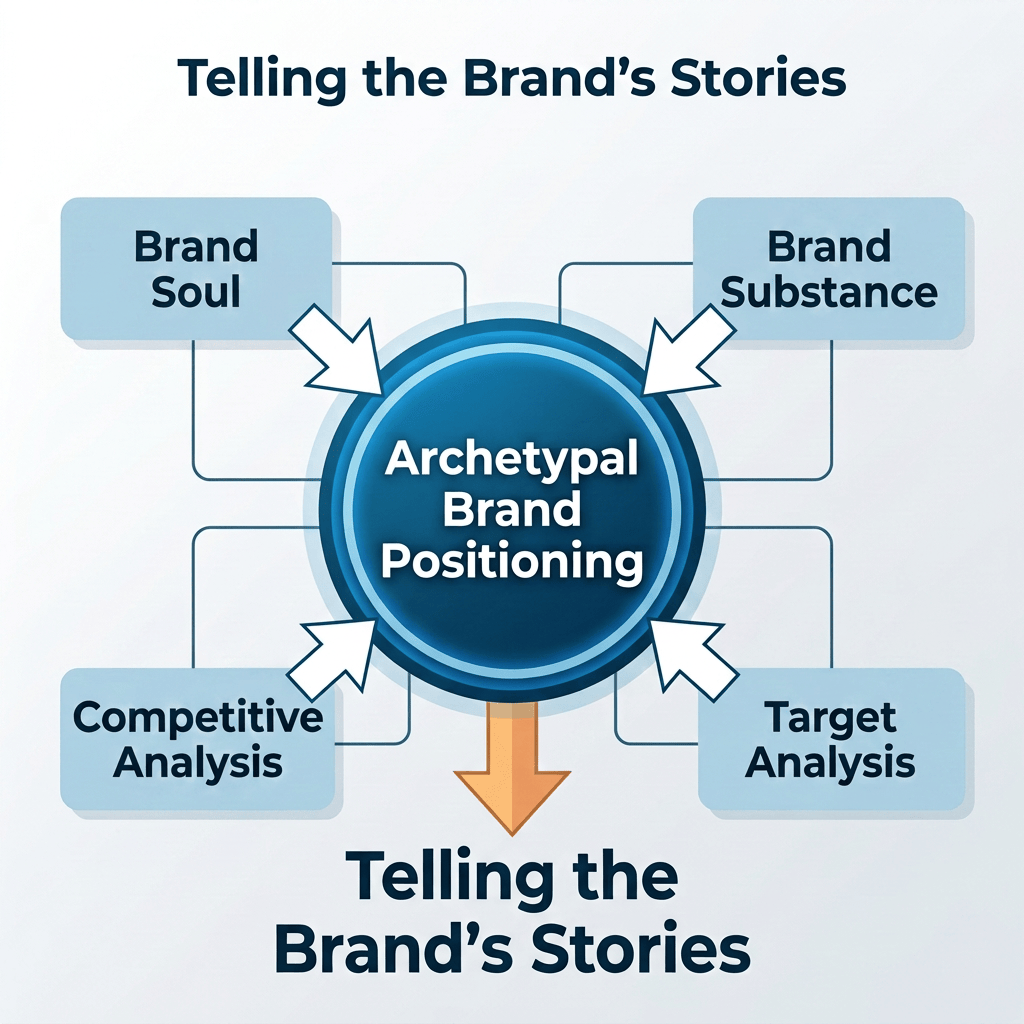
Approach the exercise as though you were the brand’s biographer, adressing questions such as ‘Who created it, and why? What was going on in the broader culture at the time? How was it first positioned? What was the best or most memorable communication ever created for it? How have customers related to the brand over the years? How do they relate to it now? What within its essence or equity makes it stand out from the competition?
Just like a biographer, you will be exploring both the rational and the emotinal, the ‘documented’ history as well as the folklore about the brand.
When you are branding a company or an organisation, taking an extra step is wise. Take some time to access your organisational culture and its values. Look at the brand or the company’s creation stories. How did it start? What are the core values of the founder? If there were a documentary film made about your brand what would it be called? What would its plot be?
Often, discovering the deep essence or soul of a brand – especially when that essence is congruent with the organisation’s values – leads to an archetypal identity that feels so true, so right, that it seems unnecessary to go any further. But even if it is the right answer, pursuing the recommended five steps in their entirety is necessary, because the interpretation of that essence must be both relevant and differentiating in a contemporary context.
Step Two: Searching for Brand Substance
The second step of the analysis ensures that the archetypal idenity suggested by ‘the dig’ is also grounded in some truth about the product or service – ideally a physical, contemporary truth. For example many banks and savings and loan associations originated as Caregiver institutions. Recall again ‘It is a Wonderful Life, in which the townspeople are taken care of by George’s bank and in tturn, they empty their wallets and their piggybanks to help bail out the bank when it’s in trouble. Not just in the movies, but in real life, many neighborhood and small-town banking brands once had warm and supportive relationships with the their customers, grounded in a sense of real trust and stability.
But if such a bank wanted to assume a Caregiver identity today, we would need to explore the contemporary authenticity of that concept. What’s the basis of the bank’s relationship with its customers? Is there a real relationship or just a series of transactions? What is the character of the bank’s internal employee policies? Its customer complaint policies? What happens if a customer who is gernally repsonsible is suddenly late with her mortgage payment because she has lost her job?
It could well be that a Caregiver identity is out of the question, even though it probably would offer a relevant and differentitating communication position. On the other hand, honestly exploring what the bank truly delivers consistently and well may lead to other symbolic avenues that are equally compelling.
Sometimes these physical or functional points of leverage are obvious and clearly link up with an archetypal meaning. For example technologies that are entirely new to a culture often have an obvious ‘Magician’ quality to them until they become commonplace.
When the characteristics of the product do not so clearly indicate an archetypal identity, sensitive, in-depth consumer research is necessary to uncover the truth about what has been called ‘the inherent drama of the product’ as it is as experienced in real life, day-to-day use. This kind of research goes beyond providing data or even information – it assumes the skills, perspective and analytic ability that lead to real insight.
Ethnographic studies are one means of getting closer to that kind of human truth. Adapted from cultural anthropology,, this approach involves the researcher spending time with the target customer in his or her environment, observing, interacting and discussing the product and its benefits in the larger context of the consumer’s life. It may take a few hours or even a few days, but the opportunities for learning are endless. How does the prospect decorate his or her home? What’s in the cupboards? When is the household most tense? When is it most relaxed? What are the interactions between its members like? What in the home is most expressive of the prospect’s values? What would he or she run back to save in a fire? Often this kind of up-close-and-personal perspective yields surprising results.
Some questions that might lead to a deeper exploration of the relationship between consumer and brand include the following:
Is the brand’s role functional or value expressive for its users?
Is the brand part of a high-involvement or low-involvement product category?
Is use of the brand episodic or routine?
Do consumers tend to use the brand exclusively or as their dominant brand, or is the brand part of a portfolio of brands that consumers find equally acceptable?
What is consumer’s level of attachment to the brand?
Are you trying to hold onto your current franchise or attract users who favor other brands to move to your franchise, or are you trying to expand use of the product category overall by way of attraction to your brand?
Do you simply want to increase frequency of use of your brand among those who already use it?
Step Three: Finding the Competitive Leverage
After several iterative explorations and some well-done and sensitive consumer research, steps one and two have generally led clients to develop a hypothesis about the archetype or archetypes that are right and true for the brand they are interested in. Step three ensures that the ‘answer’ is not just a comfortable fit, but that it will offer significant and sustainable differentiation in the marketplace.
To begin to assess whether the archetype provides a basis for your brand’s uniqueness, examine the competitive set in terms of archetypal meaning:
- Have any brands stumbled into archetypal territory? If so, which archetypes? Are you clearly related to the archetype most suited to your brand?
- How well are the competitors supporting and living up to their archetypes?
- At what level are the competitors expressing the archetype? Is there an opportunity to move to a deeper, more relevant, or differentiating level?
- Is everyone in the category expressing the same one or two archetypes? Is there an opportunity for a truly new archetype in the category?
Often the leading brand in a category comes to own the dominant category archetype. If the leader is doing that and is doing it well, differentiation can be created from some other secondary or perhaps altogether new category archetype.
The category leader also sometimes presents the opportunity for a ‘challenger’ archetype.
Another opportunity for differentiation can be found in identifying a new level of the archetype that has been overlooked in the category.
This competitive assessment should illuminate your thinking and narrow the field of archetypes to the one that is clearly best. It may be tempting to ‘borrow’ a little from one or another archetype, but then the essential power of the clear, coherent concept of one archetype is compromised. Instead, once an archetype seems to be the right one for your brand, plumb the depts of that concept. Examine the levels of your archetype as highlighted in the previous chapters.
Sometimes it is useful to make a simple chart of how your competitors are positioning their product at a particular time.
Whe the development of new products is the key, analyzing the category from an archetypal perspective can lead to some decidedly out-of-the-box thinking. The framework forces you to think about some suprising possibilities. What would an Outlaw bank provide?
Whether your product is a new venture or an established brand, determine the level of its archetype that is best for you to leverage. Then, explore how you might express that archetype in every aspect of the brand. Brainstorm where your archetype can lead you, in every possible communication discipline. Then, go on to further enrich your direction by infusing this new or clarified brand identity with a deep understanding of your customer.
Step Four: Know Your Customer
The final stage of the analysis ensures that the archetype is likely to be powerfully relevant and meaningful to your target prospect. While some part of us responds to each and every archetype, particular contexts, situations or transition points in life make an archetype especially potent.
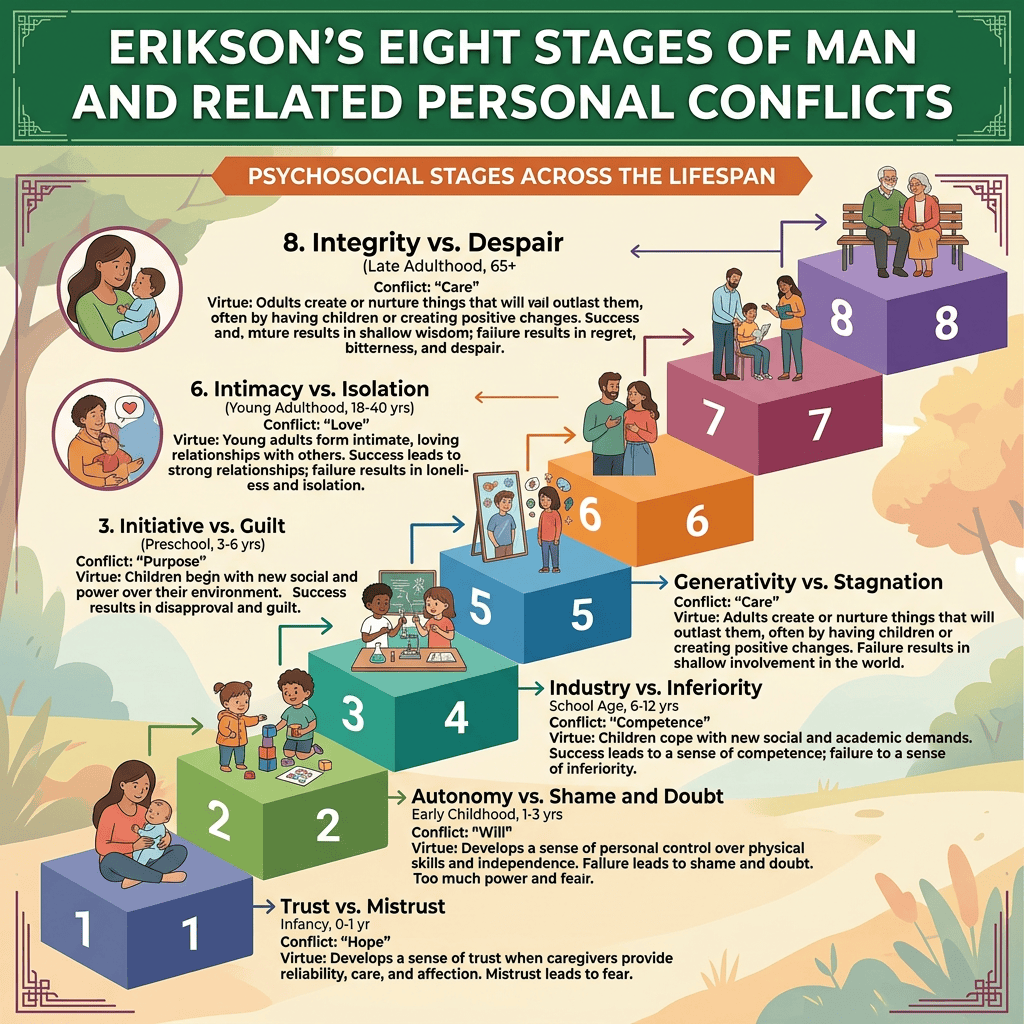
Consideration of your customer’s life stage is a good starting point of examination of their relationship to the archetype you’re thinking about using.
Beyond your prospect’s own individual stage in life, it is also wise to consider your prospect’s stage in the family life cycle. Are they younder or older singles, or are they elderly solitary survivors. Given the fact that people nowadays tend to delay marriage and child rearing until later in life, it is entirely possible that individuals in one of Erickson’s later stages of personal delopment might still be in an early stage of family formaton.
Similarly, sometimes the dominant or most visible aspect of the target market population does not necessarily present the best opportunity for connecting with them.
The system of archetypes can offer a substantive route to our understanding of individual customers and the culture that surrounds them by enabling us to focus on ‘trends’ in a far deeper and more meaningful way than is now practiced. We are not talking here of swerving from one archetype to another, based on what is in style and what is out style. At the time a brand is launching its identity, it may do well to ride the wave of a suppressed but emerging archetype. Once that identity is established, then determine how to stabilize that expression of a basic human need in a way that can endure over timie.
In either case, it is useful to reflect on questions such as ‘Which fundamental human needs are being well served at this point in our individual or collective history, and which are being underserved? These questions will lead to real insight and inspiration.
And so, the final step delves much more deeply than conventional approaches into the wishes, fears, conflicts and aspirations of the target audience in order to thoroughly understand how the archetype will resonate with them.
Step Five: Staying on Course: Managing the ‘Brand Bank’
By the end of this unique analytic process, companies have an unprecedented degree of confidence regarding their potential iconic or archetypal place in the world – which results in both marketplace success and an exciting and invigorating focus for the whole organisation.
Once the brand’s archetypeal place in the world has been clarified, the process of nourishing that identity and benefiting form it – must be managed carefully. One metaphor that has been helpful to both brand managers who make day-to-day decisions for their businesses and corporate leaders , who are responsible for long range planning is the concept of the brand bank.
A brand is a repository of rich meaning and goodwill on the part of consumers. Any action in the name of that brand or ‘offer’ – be it a short-term price promotion to attract new users, a customer relationship program or an extension of the product line – enhances or nourishes the essential archetypal meaning of the brand or it trades on it. More and more companies are electing to try to leverage strong existing equities to the max, as the cost of launching a new brand escalates along with the risk of failure in highly competitive marketplaces.
It is not that simple, however: Companies must have invested heavily in creating strong, consistent archetypal associations over time before assuming that they can cash in on them through brand extensions.
Beyond being sure that we have consistently nurtured a strong identity, we have to be sure that actions which ‘withdraw’ from the Brand Bank are accompanied by commensurate actions with deposit the desired meaning into it.
This kind of brand bank or balance sheet can be managed almost intuitively in the case of smaller one-product bands. But as more and more brands become multiproduct superbrands, the need for more conscious banking is necessary. The burden falls entirely on maintaining some kind of conceptual unity across offerings and ensuring that that meaning is not depleted by continuous withdrawals but is constantly reinforced and replenished.
TELLING YOUR BRAND STORY
Much can be said about the qualities and characteristics of good marketing communication. But truly great communication – communication that creates, builds and sustains the power of great brands – embodies an elementary paradox. Like all extraordinary literature and art, it lies a the intersection of timelesssness and timeliness. It captures or taps into a fundamental, enduring truth about the human condition. And, at the same time, it expresses that truth in a fresh and contemporarry way.
Let Me Tell You a Story
As the storytellers for archetypal brands, we should be capable of understanding and expressing the great human stories, providing a voice to be communicated through advertising, points of sale, website, public relations and so on – that is worthy of a mythic identity. In many cases, these stories may be the narratives that reveal the essential dilemmas and issues surrounding your archetype. However great story patterns can often be used by more than one archetype. For example, the Cinderella story is a Lover story, so it is a good story to tell for a Lover brand. However, if your brand has a function similar to that of the fairy godmother, then the story could be used by a Magician brand, casting the brand in the role of the magical helper. If your brand has a Hero or Explorer identity, you would focus on the role of the prince, searching everywhere for his lost love and, in the process, rescuing her.
But what are the great stories? And what is the meaning and purpose of stories in our lives in the first place? It pays to consider the early role that stories played in our lives and in the evolution of the culture.
The best stories, then, the stories that transcend time and place are more than simply entertaining they are in some way useful to us. They help us work through unconscious pressures and deal with fear, anger and anxiety and they lend expression to deep yearnings we are often unable to articulate or even identify. They may be cloaked in quite contemporary dress – and the delivery system may be a film, a well told joke or a 30 second commercial, but if it provides this kind of profound value or utility, it will move us powerfully. We want to understand the lesson, the gift of the story, to get it and to integrate it into our lives.
Bringing the Myths to Branding
I have long believed that archetypal story patterns can be studied, codified and applied to the development of brand stories and other commercial communication. I also feel that the marketing and branding community suffers from a kind of insularity, in that it does not fully benefit from what could be learned from how the public responds to art and literature – not just the stuff of universities and intellectuals, but in their most common and everyday forms. If we are the storytellers, why aren’t we continually examining and trying to understand the appel of stories people buy. Or shouldn’t we be continually analyzing the content of the lyrics of the most popular songs? And most importantly, why wouldn’t we feel some urgency to understand the stories that people have loved and cherished over the ages and around the world?
Analyzing great movies i found that virtually allof the leading box office hits of the past 75 years reflected mythic patterns in whole or in part. In most cases, these patterns had antecedents in literature, sacred stories, myth and legend. But in some cases, interestingly enough film seemed to be required to make some adaptions in order to satisfy the public. This was most notable among what t hey called the ‘cautionary tales’. Religions and literature abound with a category they titled ‘Paradise Lost’ . The Innocent, unsatisfied by the beauty of the world around him, reaches for forbidden fruit and, as a result, loses all that was good about his life. In the Bible or in medieval morality plays no one got the chance to gripe about ‘ticket prices’ just because there was a stern warning and an unhappy ending. BUt in films, the ‘warning’ must be delivered in a more oblique way if it is to be accepted. For the most part though the story structures of successful films are remarkably consistent with fables, myth, and legend. Consider for instance our Ugly Duckling construct.
The Ugly Duckling
- the special beauty, virtue or power of the protagonist is hidden by ordinary clothing or a disguise
- the character is trapped in stasis
- no one realizes the character’s true inner capabilities or virtues, except for one individual, who suspects them
- the key moment is the change of costume or externals that reveals the true inner self
- the character can begin to realize his or her special identity
- forces (or internal obstacles) conspire to bring the character back to his or her original role
- the character overcomes those forces and gains deserved recognition.
The psychological ‘gift’ or appeal of the Ugly Cudkling story is that it reflects a deep yearning we all feel from time to time. If only they knew how good or how smart I am deep inside, if only they understood the real me, I’d be accepted, promoted, loved, etc. In the great Ugly Duckling stories, we are shown how to understand and express who we are, and then everything falls into place.
The total inventory of these rich story patterns can be understood as either guides or warnings, imparting corresponding messages or gifts.
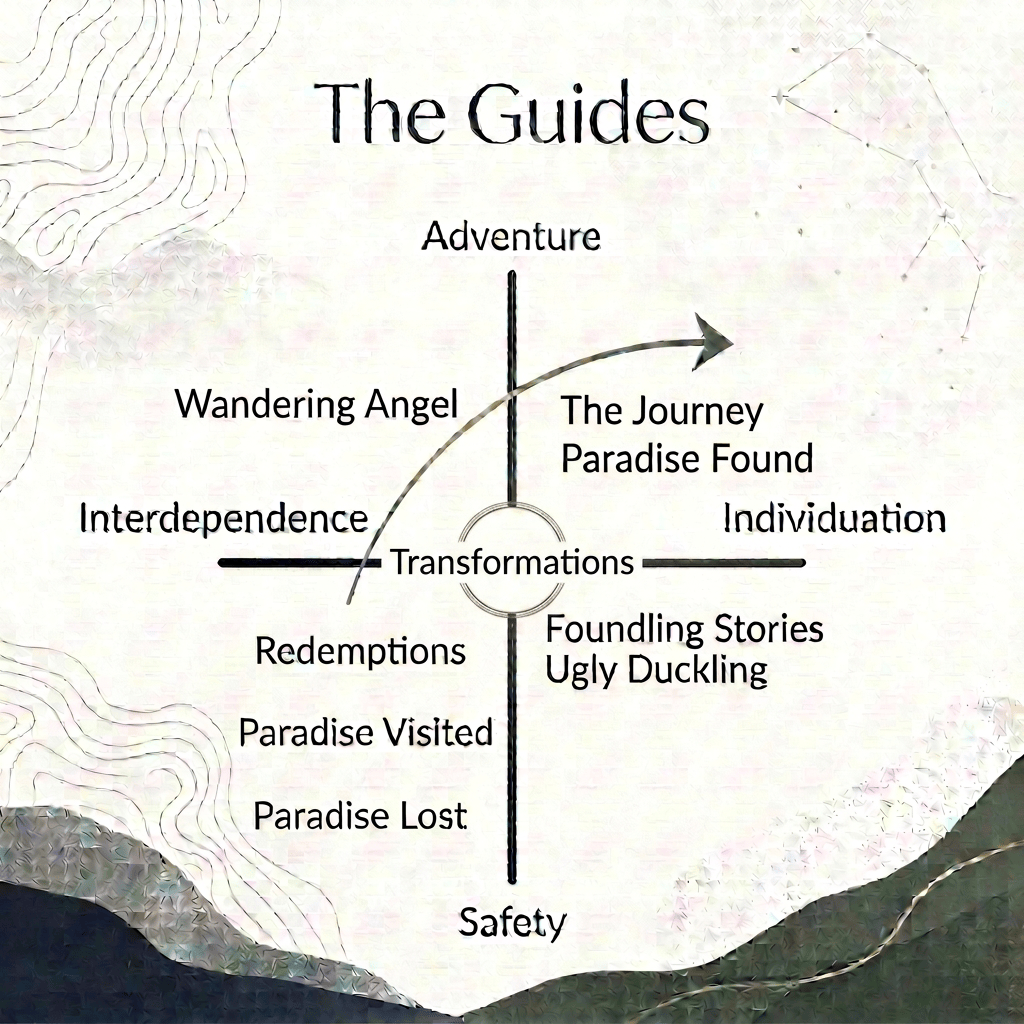
The lifelong process of maturation and development is reflected in the arc of the story patterns on the grid. Like the archetypes, each fits primarily in one quadrant, but in stories there is a built-in assumption of character development, of change.
For example, the stories in the lower left-hand quadrant reflect an appreciation of the status quo and a fear of change – feelings reflective of an individual’s or a whole culture’s desire to remain safe. Transformation stories, at the intersection of the map, deal with a quantum leap, the moment of transition when we become ready to pursue our destiny. Moving to the upper right hand quadrant, we see that the Hero’s Journey reflects the quest for self-actualization and wholeness; Paradise Found is the realization of that wholeness
The Wandering Angel structure, shown on the arc, involves the catalyst for helping the protagonist make the transition from one stage to the next in the process of maturation and self-development. In a classic film such as ‘It’s a Wonderful Life it is a mystical or transient character who shows the way for the protagonist to get unstuck, get on with it – treasure the circumstances of his or her own life. The shifts that are undertaken may be related to one’s life stage and development, or they may be related to an evolution of needs, independent of the stage in life. Throughout our lives, all of these structures are useful, but, depending on the cultural zeitgeist or more personal issues that we are dealing with, one or more of the structures will seem more relevant.
For example the Paradise structures may be very compelling to the overwrought Ruler who is wishing that he or she could simply exist that life, cast off the trappings of success and enjoy everyday pleasures – in short, the wish of the Ruler to become the Innocent. The Paradise Visited story pattern speaks to this pining: the Protagonist inadvertently stumbles into an earthly paradise, savors its simplicity for a moment, but then reluctantly realizes that he or she must return to business as usual.
The Paradise Found structure takes that yearning to another plane. In this pattern, the protagonist is in stasis. He may have a problem he needs to deal with or a vague sense that things could be better, but he has no plan. Then he stumbles into a perfect place, where life is simple, priorities are in order and he can take time to smell the roses. At first he struggles with the strangeness of it all, but over time, its beauty begins to reveal itself to him. He is called back to his ordinary world and reluctantly leaves the Innocent paradise. He attempts to return to the life he was living, but he can’t cope as he did before; now that he knows too much, he has been irreversibly transformed by the process. He finds the Utopia again and chooses to stay there.
The stories that reflect this pattern go far beyond the idea of just breaking the surface and putting a toe in the water: the protagonist takes the plunge and changes his or her life.
The Interplay of Guides and Warnings
Understanding the interplay of the guides and the warnings plays an important role in helping us to understand which story to use when. For example a biotech campus in trying to communicate about the important work the organisation is doing in genetic research is considering both the positive and the ‘darker’ stories that relate to reaching beyond customary boundaries. On the ‘dark’ side, related stories fall into the category of Playing God, expressed in films like Frankenstein – science so seductive that it leads human beings to overstep their circumscribed bounds and venture into the realm that rightly belongs only to the deities. But on the positive side, the corollary to these urges, taken as a guide, shows how the healthy and appropriate reaching for success is the story of the Hero (who rescues the vulnerable ones), the Magician (who transforms people and things for the better) and the Sage (who provides wisdom and knowledge). Informed by both types of story patterns, the organisation thus is in a position to communicate in inspiring, rather than frightening ways.
This newly developed inventory of story patterns is now helping communicators of all stripes to benefit from the inspiration offered by timeless, beloved tales. And it is finally working its way into the little stories we call advertising.
One Archetype, Many Stories
Our approach recommends identifying the most appropiate and effective single archetype for your brand. By having done that you will likely find that a myriad of story patterns, or different aspects of one story pattern can inspire your brand’s communication over time. Start by revisiting the motivational needs that underlie your brands’ archetype, and then find the corresponding concepts that relate to the story patterns.
For example, Nike, once a strong Warrior/Hero brand, did a great job of expressing some parts of the heroś journey: the call to adventure (just do it); entering a special world (magnificent vistas, the private space of the runner) and the supreme ordeal (the implication that by testing yourself, you are taking on your own inner demons). But much opportunity for plumbing the depts of the story further was left unrealized: Who is the runner’s Merlin, or wise elder? Who are his or her allies and enemies What is the elixier in this case and how do you find it.
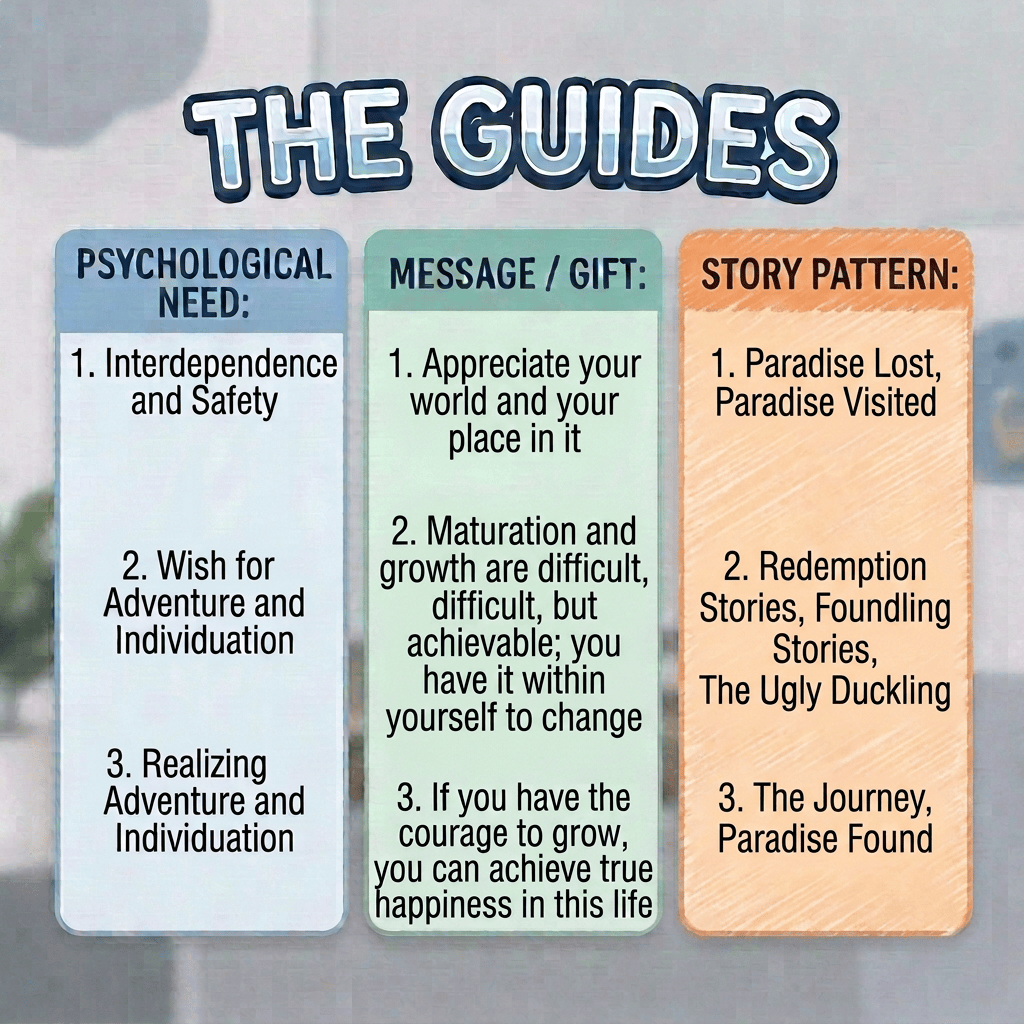
Today’s Story Becomes Tomorrow’s Icon
Archetypal brands are classless, ageless, and regionless, and their deep meaning must be inviolate. That’s why it matters that the brand’s story must be congruent with the brand’s core archetype. Brands are trusted to the degree that everything they do is consistent. Products seem right when everything about them is aligned with their informing archetype. This obviously includes the product’s logo, tag line, product design, packaging,, and placement in stores, as well as the design of the story, the environment surrounding the sale of the product and the look and story line of all promotional materials. They all should tell your story.
Brands make history, and they become history. They may be part of our shared story on our personal and individual narratives. Etched deeply in our collective and individual memories are stories of our ancestors and our first loves, our dreams realized and unfulfilled. The commercial world is comingled with these deepest memories and longings. We need only study and understand these road maps of the unconscious to find the surest paths for our brands.
THE REAL McCOY
Branding and Organisaztional Congruence
The core ideology of any organisation defines its enduring character, providing a consistent identity that transcends product or market life cycles, technological breakthroughs, management fads and individual leaders. Core values are therefore ‘the glue that holds an organisation together through tough times.
It is not enough to get together, write up your vales and then put them in a drawer or even post them on the wall. You have to mean them. They have to be the driving force in the organisation, or they are essentially useless. Beneath any set of values lies an archetype. When that archetype and your stated values inform your real behavior, people recognize that you are the ‘real McCoy’. You do not just spout empty words; you walk your talk.
Companies and their leadership cannot stand behind their values in trying times if those values are only skin deep. How does a leader instill values that stick? You tell your company story and retell it. Tell it to the public, to your board, to investors, to your employees, and to your leadership team, and make sure someone tells it to all new hires during their orientation.
These stories , must of course, distill organisational values and inspire enthusiasm – even passion. Where do you find such stories? Most organisations have their own sacred mythology: creation stories, stories of crises weathered, tales of exceptional performance, jokes that capture and defuse the organisation’s human frailties, and visionary images of longed-for future outcomes. If your company – or your client – does not tell such stories, then it is not too late to take people down memory lane to reclaim the lost company heritage.
For people who were there at the start, help them remember what captured their imagination when they dreamed of the company. If they are no longer around, do research and find out what it was like for the founders. Have people remember when they were hired and what attracted them to the organisation. Enlist them in detailing what they like best about the company – not just in the abstract, but in anecdotes that provide the substance and the feel of what is going right.
It is easy to think that all stakeholders in your organisation know the deeper and more high-minded values that inform your actions. However, in the hustle and bustle and rush of daily life, it is natural for them to forget why they care about what they are doing. Sacred stories – of a religion, nation, family or company – bear repeating. The repetition helps the values to sink in and continually inspire belief and loyalty.
Branding and Organisational Coherence
Branding, if done well, can help large and comple organisations to sustain coherence during quickly changing times. The current high pressure, fast-paced economic climate has required companies to shrink their internal structure. Hierarchies are modified: Often, everyone required for a project gets involvd in ways that cross both status and unit lines. In addition, with virtually full employment, workers expect to be treated with respect and to make autonomous decisions within their own areas of expertise. Standard organisational development practice now encourages flexibility, self organising teams, and other strategies that bring out the full intelligence of the group and that increase the company’s fliexibility in solving problems.
It is a most interesting world. However, in many organisations this greater fluidity often goes to the edge of chaos, especially if no one knows what anyone else is doing. Frequently marketing plans are drawn up for products that are still at the design stage. Different teams work on research and development, design, manufacturing, sales and marketing – with very little interaction between and among them.
A clear archetypal identity not only for the product, but for the company, acts as the ‘strange attractor’ that allows an orderly pattern to emerge even in chaotic conditions.
The growing consensus in organisational literature today is that the equivalent of the strange attractor in a company is its values – not necessarily its stated values, but its real values. We would add to this the understanding that foundational to these values is an archetype that defines them. Therefore, it is the archetypal structure of an organisation that keeps it from spinning out of control..
You undoubtedly know this from experience. In values-based businesses, people have a compass to guide their actions, even when the boss is not around. They also have a bond with one another. They are not just random strangers working together, but people committed to the same ends. People who share such convictions moreover, have an advantage over those who do not in being able to trust one another and to work out problems when they arise. Of course, this happy result occurs only if people know what values are and what it means to live by them.
Clearly, good communication and collaborative systems are also necessary in today’s fluid environments. But it is even more important that people live the same archetypal story. Then they will not be loose cannons going off in their own direction to take actions that are incongruous with the overall meaning structure of the brand. Different units and teams may also have active archetypes that relate to their function.
Obviously in a free society, people cannot be compelled to have the same values and resonate with the same archetype. However, if a brand identity is clear, they do not have to be compelled. A company will attract employees, investors, suppliers and customers, like metal flings toward a magnet.
Although everything is changing very fast, archetypes are eternal. They can evolve in the level of their expression in us, but they themselves do not change. if we share an archetypal perspective we are anchored in permanence, even as the material structures of our lives shift their shapes around us.
What Story Are You Living?
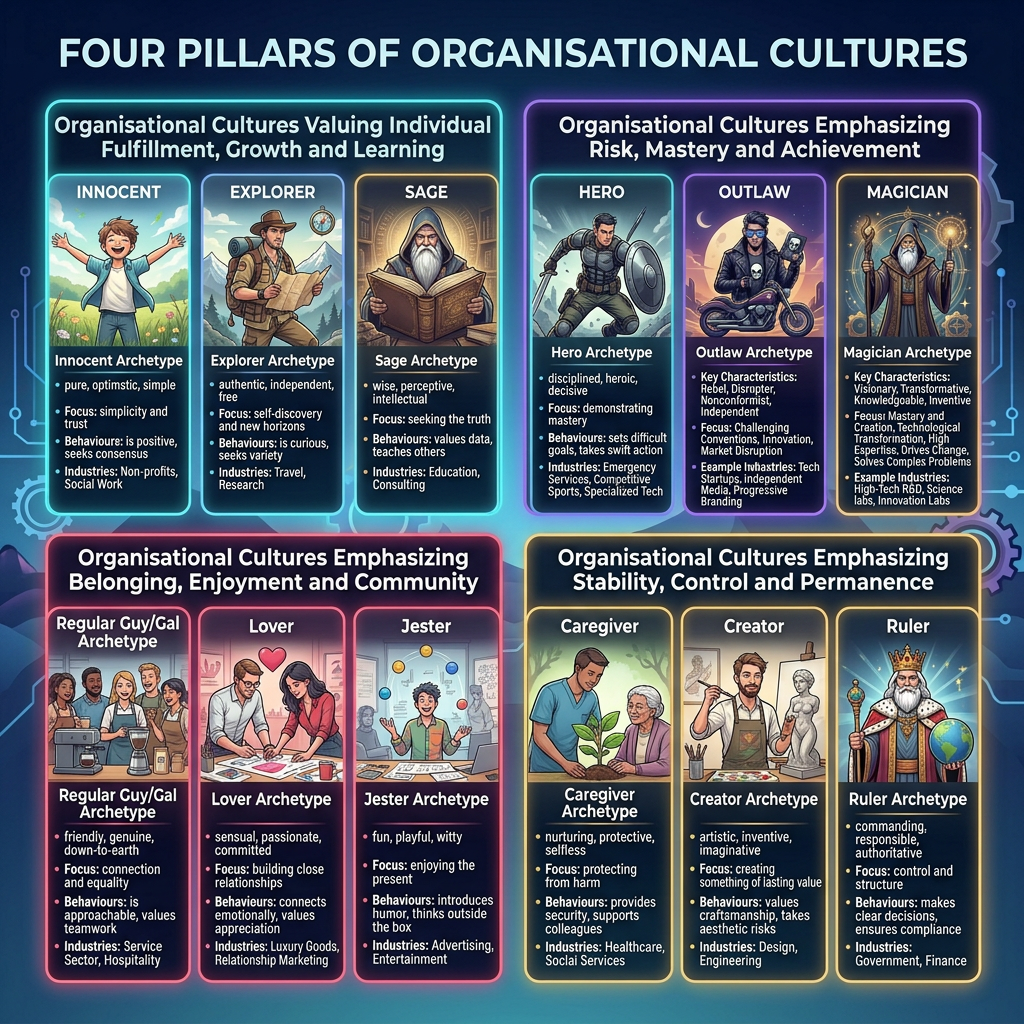
Sometimes, people within an organisation are not even aware of the strength of the values that underlie the story they are living until one is violated.
The archetypal structure of culture is generally invisible and unarticulated. Sometimes new hires fail – even at the top – because they do not read the culture adequately. In a Jester organisation, you can be ostracized if you have no sense of humor. In some Lover organisations, the unspoken rule is that everyone knows everything about everyone else. They all share stories about their lives, their kids, and even their fears and their dreams. Anyone who wants to keep him or herself may have a very difficult time succeeding. In a Warrior culture you do ot want to seem like a wimp. In Outlaw culture, it is not wise to appear too goody-goody
In all these cases, many of the employees and certainly those who fit in the best, find their self-selfesteem through the same story. Caregivers feel good about themselves to the degree that they are caring; Creators by producing something beautiful, imaginative and cutting edge and Rulers by establishing and maintaining systems that make life more orderly and predictable.
So what do you do when tere is a real need for a culture change? Ideally, you introduce a new story while also valuing and honoring the old one. This is a little like having one brand identity while recognizing the power of the category essence. An organisation’s fundamental story is usually derived from its product line, its founder and early decisions that were made and encoded in an oral history that becomes its story. Over time, the company hires people who have the right chemistry – meaning that they live by the same story. You can introduce new stories, but they are like new software. At this point, it works best to think of the historic brand identity as the operating system which is inevitably still defined by the old story. All the new software needs is to be compatible. You can update the operating system, but replacing it requires you to start over, losing your brand equity.
However you can move from a lower level to a higher level of an archetype relatively easily, especially if that change is required by circumstances or supported by cultural change. Moreover for the brand identity to remain vital, its expression should keep up with the consciousness of the time. If the archetype’s expression is evolving in your customers, the level of the archetype in your commercial messages and in your organisational culture need to keep pace.
Most importantly, even when new qualities and habits of mind need to be introduced into a culture, its brand identity must remain clear – not only to keep faith with customers, but also for internal congruence and effectiveness.
Staying Out of Trouble
If you understand the archetypal underpinnings of an organisational culture, you can also recognize the company’s shadow. When individuals and groups typically identify the positive qualities of an archetype, they may repress other archetypes that can surface in unpleasant and unconscious ways. For example in a Caregiver culture, everyone wants to seem kind and compassionate. Aggresive urges, then, go underground and can surface as very petty and manipulative politics. No one admits to wanting power, but power struggles go on all the time. Because the power dynamic is not an open subject for discussion, those contests do not have to follow any kind of rules or fair play.
That’s how the shadow operates. As we have seen, each archetype also has its own negative temptation. That is, the archetype itself has a shadow, too. It is prudent to remain vigilant, to note when the archetype is moving into its more negative potentialities and take preventive action to redirect it into its positive form before trouble surfaces.
The antidote to shadow possession in an organisation is to bring the behaviors out in the open where they can be looked at and reflected upon. This gives the organisation a chance to express the suppressed archetype in a more appropriate and integrated way.
Making the Unconscious Conscious
The branding process provides a wonderful opportunity for analyzing your organisational culture and clarifying its values, mission, future vision and core archetype. Doing so makes the unconscious conscious in a way that helps better staffing decisions, orient new employees more effectively and retain talent. Your analysis can help different unites within the organisation to talk the same language with one another and increase the chances that the information customers get informally from employees is congruent with your intended brand identity.
We have a series of instruments that can help 1) organisations assess the archetypal roots of their culture 2) teams collaborate more effectively and 3) individuals understand how to be successful within a given organisational culture. However you can also diagnose a culture by walking around, listening, watching and asking some questions.
Begin collecting examples of the organisation’s sacred stories. Notice what archetypal plot they represent. Then ask yourself the following questions:
- What is the name of your company and what does it mean?
- What are your company’s logo and motto? What do they symbolize or suggest?
- How do people in your organisation dress and interact?
- Sometimes the actual architecture or the office layout is informative. Use your imagination to answer the question ‘If this were a setting for a play or movie, what would it be called’
- Look at the promotional materials that are popular in-house. Ask people what they most value about the organisation? As them what is difficult about it?
- If this is your organisation, think deeply about its function in your life. Does it give you stability and respectability (which might suggest the Ruler or the Innocent)? Does it make you feel cared for or give you a chance to care for others (which might suggest the Caregiver)? Ask similar questions about the other archetypes. If the organisation is your client, ask people at different levels these questions.
- Conduct or review consumer research. How do the customers see the organisation?
Understanding the archetypal dimension of an organisational culture gives you greater power to recognize the invisible forces at work within it. As a company aligns its brand identity with the trut about its real cultural values, it is easier for it to be, and to be perceived as ‘a real McCoy’. Doing so provides a winning brand identity powerful enough to withstand great difficulties. Most importantly, the exercise of branding allows a company to know itself and its loyalties at a new level by decoding its core archetype.
If you are starting (or helping to start) a new enterprise look inward and clarify your values. Notice the structure of your daydreams, and decide how you want the plot to develop. Monitor your dreams by writing them down. Overall, pay attention to what archetype answers the real yearning of your soul – one that could do the same for customers.
The ancient Greeks and Romans often went to the temple of a certain god or goddess to gain certain virtues. They might seek out the temple of Artemis if they hoped for an easy labor, the Temple of Zeus if they wanted political power, or that of Aphrodite if they desired love. We no longer visit the archetypes in temples, but in a very real way, we need to recognize what ‘shrine’ we are metaphorically inhabiting. Doing so helps us take conscious responsibility for the impact of our messages on our customers, our culture and ourselves.
LEAVING A LEGACY
The Ethics of Archetypal Marketing
The impact of brand marketing, especially advertising is immeasurable. To a great extent, attention determines history. That is, what we focus on and resonate to reinforces patterns of consciousness that in turn direct action. Advertising is the art form of our age, if Michelangelo were alive today he might work in advertising.
Long called ‘Captains of Consciousness’ marketing communication folk have been simultaneously elevated and vilified. But what could they do? Their charge was to sell the product, and often the most that could be hoped for was that they would do so in entertaining or at least innocuous ways.
The study of archetypes, though, invites us to contemplate another avenue: Thinking more deeply about individual consumers, the culture at large and our own organisations allows us to entertain possibilities that could be winning strategies for management or for clients and, at the same time, provide a theory that helps us resolve or even anticipate and diffuse ethical problems that arise in advertisement.
When You Wish upon a Star
The field of marketing inhabits the world of dreaming. When we enter the world of what we want to be true, rather than what is true, we are allowing ourselves to feel human yearnings that reveal our vulnerabilities. Think for a minute about children’s stories that continue to capture the heart, however much they are repeated. Gepetto wishes for a son, and the Blue Fairy appears from the sky to bring life to the puppet Pinocchio.
As marketers we trade in the realm of human dreams and aspirations. Corporate executives want to create brand icons that launch their companies into extraordinary success. The underlying forces behind these motivations go far beyond the need simply to do their job well or get a return for their stockholders. Such desires ae not just about making money. They evoke a passion for success that originates in issues of self-esteem, in deep needs to prove oneself to one’s parents and others, in a desire to avoid the experience of powerlessness by winning really big, and so on.
These matters are not trivial. So, too, customer buy products that appeal to their most deeply cherished hopes and dreams. Unconsciously, people expect professionals in the marketing field to be fairy godmothers, turning products that are sow’s ears into silk purses or fulfilling customer’s dreams that no real product can satisfy.
All of us have dreams and yearnings. If we could be granted three wishes, most of us might begin by wishing for the fulfillment of our personal desires, but if we took some pause before making all of our wishes, at least one of our wishs would likely express some hope for the world. We might wish for world peace, the protection of the environment, or a renewed sense of community in the world. Virtually everyone has some altruistic desire to make a difference in the world. However much we cmprehend the enormous impact that commercial messages have on the culture of the time, we understand that we cannot necessarily make even our own dreams come true through the work we do day to day.
The truth is, however that we exist in the real world, where we cannot always control the outcome of our own actions, much less the fate of the culture. We cannot transform an inferior product into a winning one, nor can we provide the kind of meaning in people’s lives that they truly crave. If we look at the basic categories of human motivation, we might safely conclude that the real fulfillment for customers will come from spiritual faith, true love, a genuine experience of familial and community engagement, genuine accomplishments, self-awareness and acceptance, a sense of making a difference in the world, and some sense of genuine rootedness in place, time, and space.
For the first time in human history, a shared mythos has broken down, and commercial messages are now taking the place of sacred stories. We know in our hearts that a profession designed to sell products cannot fill this gap. If we take the time to think of how many people are finding the only meaning they have in their lives from consumption of various sorts, we do not feel proud, we feel sad, or even outraged.
The field cannot be the fairy godmother of the culture. We do not really have magic wands, and when it comes down to it, the bottom line is that we are paid to sell products (or services, or experiences or transformations).
Accentuate the Positive Eliminate the Negative
There are wonderful ads out there that reinforce the cutting-edge potential of archetypes. However, many run-of-the-mill messages currently reinforce their negative or lower-level aspects of archetypes. For example, so many commercial messages appeal to the Ruler’s desire for power and status. However, the Ruler archetype at its higher level is willing to take on huge responsibilities, not just for money and status, but to make the world a better place. People with a high degree of Ruler tendencies also have a knack for putting together the infrastructure of policies, procedures, rules, regulations and laws that make the world function. You can think of such people as great citizens who help make things work for all of us. Is it really necessary that so many ads to appeal simply to the more crass Ruler desire to incite envy or dominate situations? You can sell products using either approach – in the first case, with the potential for reinforcing shallow tendencies in peole or, in the second case, for reinforcing something greater and nobler within them. If you can sell a product either way, why not take the high road?
Particularly when marketing professionals may be pressured to create commercial messages designed primarily to get attention, with no thought given to other factors, it is important to recognize that there is great risk that these sterotypical ads can reinforce the negative potential within an archetype.
Marketing can also have unanticipated consequences on the consciousness of individuals and of the time, however well intentioned marketers might be. It is therefore helpful in developing a marketing campaign to monitor the level of the archetype you are reinforcing and to deemphasize its shadow or negative aspects.
Telling the Stories You Want to Tell
If you are true to your brands’ archetypal identity, there are many stories, images and symbols that can keep your campaign interesting and also help you update your message to fit the time – without either reinforcing the negative possiblities within the archetype or downgrading the archetype into a shallow stereotype.
Your knowledge of archetypes will enable you to see the patterns in the expressions of timeless themes – patterns that you can use in your own work. Rather than treating everyday activities as irrelevant to the work we produce, or treating the arts and the social sciences as unrelated to business, our approach suggest that we ‘take it all in’. No field of study could be more important than the simple observation of human truth. The larger your vision and experience, the better you can be at managing meaning.
Suddenly in the last decade, it has become normative for business leaders to invest a good chunk of their time in clarifying. theri company’s values as the anchor for anything that they do. When those of us who work in marketing face the huge impact that commercial messages have on the conscousness of the time, it can be truly intimidating. It requires us to consider not only our own personal values, but also the more neubulous issue of how certain value-laden images might affect not only individual customers, but the times in which we live.
The current generatoin of marketers could be the first to show concern for the impact of the meaning that their product conveys. It is not so confusing to consider the moral domain if there is a simple tool to use in doing so, since most of us are not going back to school to get advanced degrees in philosophy or theology. The Hero and the Outlaw provides a vocabulary and a way of thinking that makes possible an informed consideration of the ways in which commercial messages affect people.
Some say that the reality of our society is that marketers have becompe contemporary priests and priestesses tending the sacred fires of cultural meaning. We have that assessment is not entirely true, and we still value the religious leaders, artists and philosophers as well as Jungian and other transfpersonal psychologists, who can more legitmately fulfill this role.
In the meantime, it is important to understand that the creative talents who spin out wonderfully designed artistic commercial messages are a bit like the ancient medicine men or women who sat with members of the tribe around the campfire and told stories filled with practical significance. Such stories instructed people around the world around them and taught them how to live.
In large measure, the stories presented by television, internet, popular music, movies and yes commercial messages shape our culture. Like it or not, the messages we create or pay for affect the quality of the consciousness of our time.
You can utilize this system for the management of brand meaning, not only to sell products, but also to leave a meaningful leagcy. You always have many choices in the images you evoke and the stories you tell in selling any product or service. Making the management of meaning systematic allows you to practice your creaft in a way that, at the very least, does no harm and at best ennobles the customers you serve. I am not calling here for industry standards or censorship. I am merely asking readers to grapple with rather profound questions like ‘What do you want your legacy to be? And what stories do you want to tell?

